
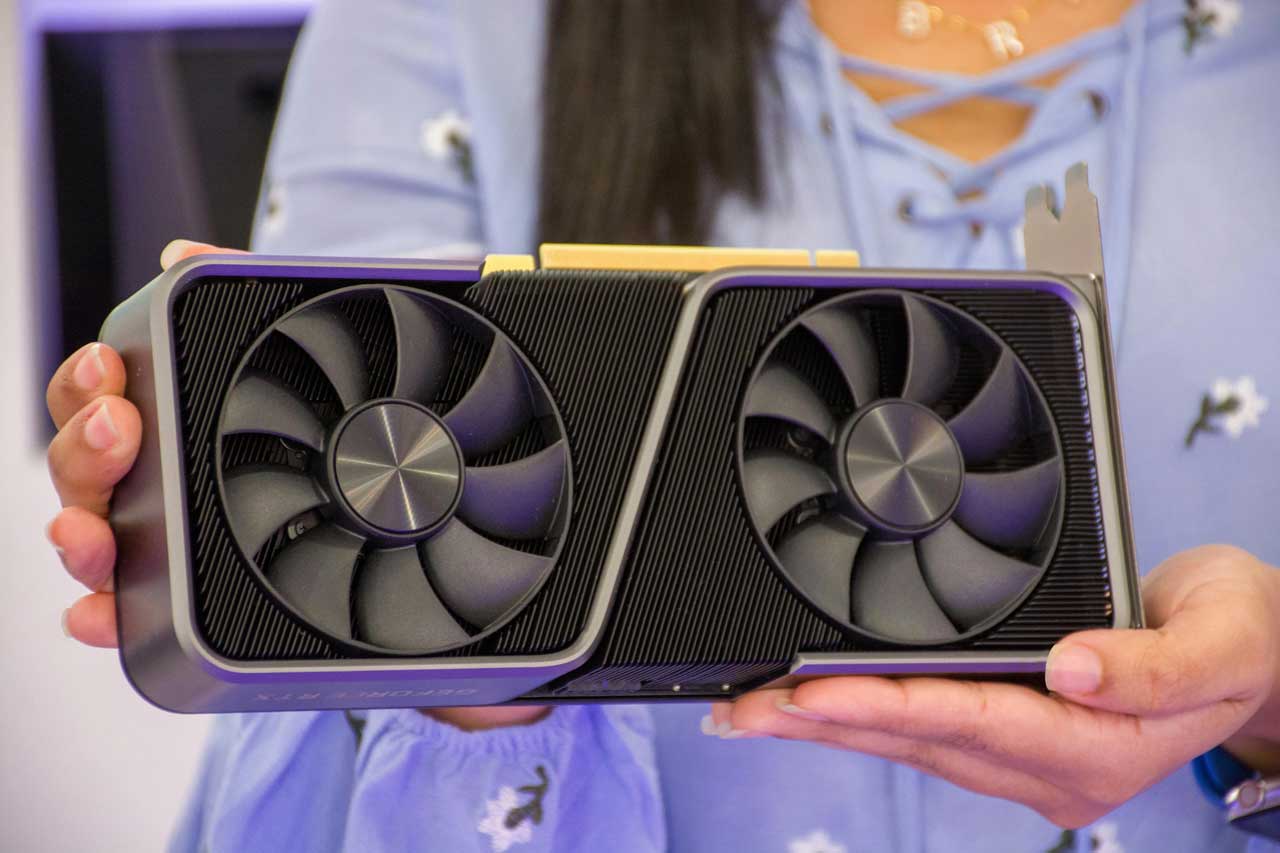
A graphic processing unit. Pexels Images.
This article presents Advanced Micro Devices (AMD)’s costs of sales (COGS) and operating expense (OpEx) by segment.
AMD’s segments consist of Data Center, Client & Gaming, and Embedded.
Let’s look at the breakdowns!
For other key statistics of AMD, you may find more resources on these pages:
Revenue
- AMD revenue segments: data center, gaming, embedded, etc.,
- AMD revenue by region: U.S., Japan, China, Europe, Taiwan, etc.,
Profit Margin
- AMD profit margin by segment: data center, gaming, client, etc.,
- AMD vs Nvidia: profit margin comparison,
- AMD vs Intel: profit margin analysis,
R&D Budget
- AMD vs Nvidia: research and development spending,
- AMD vs Intel: R&D cost
Costs & Expenses
Please use the table of contents to navigate this page.
Table Of Contents
Definitions And Overview
Insight & Summary of Observed Trends
Z1. Cost of Sales and Operating Expenses across Different Segments
COGS and OpEx to Revenue Ratio
A1. Cost of Sales and Operating Expenses to Revenue Ratio
COGS and OpEx By Segment
B1. COGS and OpEx in Data Center, Client & Gaming, and Embedded
B2. Percentage of COGS and OpEx in Data Center, Client & Gaming, and Embedded
B3. Growth Rates of COGS and OpEx in Data Center, Client & Gaming, and Embedded
Reference, Credits, and Disclosure
S1. References and Credits
S2. Disclosure
Definitions
To help readers understand the content better, the following terms and glossaries have been provided.
Data Center: AMD’s Data Center segment primarily includes server microprocessors (CPUs), graphics processing units (GPUs), accelerated processing units(APUs), data processing units (DPUs), Field Programmable Gate Arrays (FPGAs), Smart Network Interface Cards (SmartNICs), Artificial Intelligence(AI) accelerators and Adaptive System-on-Chip (SoC) products for data centers.
Client: AMD’s Client segment primarily includes CPUs, APUs, and chipsets for desktop, notebook and handheld personal computers.
Gaming: AMD’s Gaming segment primarily includes discrete GPUs, and semi-custom SoC products and development services.
Embedded: AMD’s Embedded segment primarily includes embedded CPUs, GPUs, APUs, FPGAs, System on Modules (SOMs), and Adaptive SoC products.
Summary of Cost of Sales and Operating Expenses across Different Segments
The following analysis consolidates the trends observed across AMD’s costs and expenses to revenue ratio, costs and expenses by segment, costs and expenses mix, and year-over-year growth for the 2022–2025 period.
-
AMD is undergoing a structural pivot in its cost allocation, transitioning heavily towards its high-growth Data Center segment.
-
While total costs and operating expenses are projected to grow to $30.9 billion by 2025, the efficiency of this spending is improving; the “Cost & OpEx to Revenue Ratio” has decreased from a peak of 98.2% in 2023 to 89.3% in 2025, signaling that revenue growth is beginning to outpace the growth in expenses.
-
The Data Center segment has become the primary driver of expense growth, surging by 74.0% in 2024 and another 43.3% in 2025, reflecting massive investments in AI infrastructure and high-performance computing.
-
Consequently, Data Center costs have risen from just 18.8% of the total mix in 2022 to 42.1% in 2025, overtaking Client & Gaming as the largest cost center.
-
Meanwhile, Client & Gaming costs saw significant contraction in 2023 and 2024 (-8.5% and -14.9%) before rebounding in 2025, while the “Others” category (likely legacy or non-core costs) has consistently declined, optimizing the overall expense structure.
The table below combines all metrics—Expense magnitude ($M), Mix (%), Growth (%), and the consolidated Revenue Ratio—into a single view for the latest three fiscal years.
AMD Consolidated Cost & Expense Analysis: 3-Year Average (2023–2025)
| Segment / Category | Avg. Cost & OpEx ($M) | Avg. Mix / Ratio (%) | Avg. YoY Growth (%) |
|---|---|---|---|
| Data Center | $9,119.3 M | 34.6% | +47.3% |
| Client & Gaming | $10,031.7 M | 39.3% | +4.9% |
| Embedded | $2,346.7 M | 9.4% | -0.0% |
| Others | $4,205.3 M | 16.7% | -6.9% |
| Total Costs & OpEx | $25,703.0 M | 100.0% | +12.2% |
| Ratio: Cost & OpEx to Revenue | – | 93.4% | – |
Cost of Sales and Operating Expenses to Revenue Ratio
AMD’s segments consist of data center, client, gaming, and embedded. The definitions of AMD’s segments are available here: data center, gaming, client, and embedded.
1. Average Cost & OpEx to Revenue Ratio (2023–2025)
| Metric | 3-Year Avg. Ratio |
|---|---|
| Total Costs & OpEx / Revenue | 93.4% |
COGS and OpEx in Data Center, Client & Gaming, and Embedded
AMD’s segments consist of data center, client, gaming, and embedded. The definitions of AMD’s segments are available here: data center, gaming, client, and embedded.
2. Average Costs & OpEx by Segment (2023–2025)
| Segment | 3-Year Avg. ($M) |
|---|---|
| Data Center | $9,119.3 M |
| Client & Gaming | $10,031.7 M |
| Embedded | $2,346.7 M |
| Others | $4,205.3 M |
| Total Costs & OpEx | $25,703.0 M |
Percentage of COGS and OpEx in Data Center, Client & Gaming, and Embedded
AMD’s segments consist of data center, client, gaming, and embedded. The definitions of AMD’s segments are available here: data center, gaming, client, and embedded.
3. Average Costs & OpEx Mix (2023–2025)
| Segment | 3-Year Avg. Mix (%) |
|---|---|
| Data Center | 34.6% |
| Client & Gaming | 39.3% |
| Embedded | 9.4% |
| Others | 16.7% |
Growth Rates of COGS and OpEx in Data Center, Client & Gaming, and Embedded
AMD’s segments consist of data center, client, gaming, and embedded. The definitions of AMD’s segments are available here: data center, gaming, client, and embedded.
4. Average YoY Growth (2023–2025)
| Segment | 3-Year Avg. Growth (%) |
|---|---|
| Data Center | +47.3% |
| Client & Gaming | +4.9% |
| Embedded | -0.0% |
| Others | -6.9% |
| Total Costs & OpEx | +12.2% |
References and Credits
1. All financial figures presented were obtained and referenced from AMD’s quarterly and annual reports published on the company’s investor relations page: AMD Financial Reports.
2. Pexels Images.
Disclosure
We may use artificial intelligence (AI) tools to assist us in writing some of the text in this article. However, the data is directly obtained from original sources and meticulously cross-checked by our editors multiple times to ensure its accuracy and reliability.
If you find the information in this article helpful, please consider sharing it on social media. Additionally, providing a link back to this article from any website can help us create more content like this in the future.
Thank you for your support and engagement! Your involvement helps us continue to provide high-quality, reliable content.