
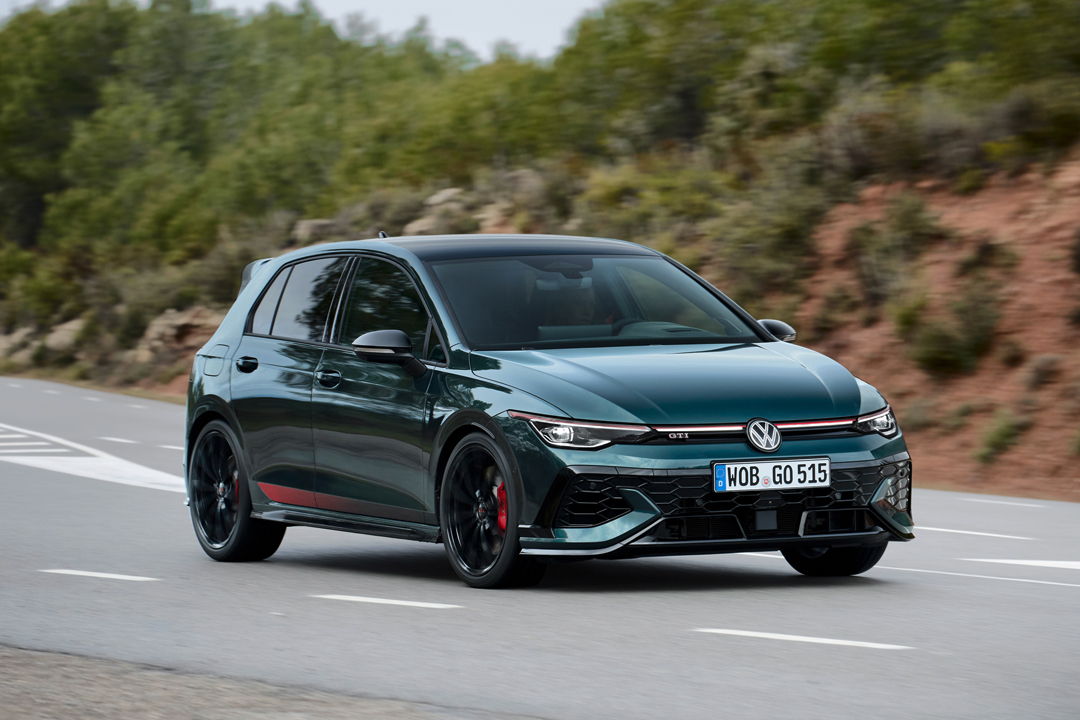
Volkswagen.
This article presents Volkwagen Group’s vehicle sales and production by region, consisting of numbers from Germany and Rest of World.
Let’s look at the results!
For other key statistics of Volkswagen, you may find more resources on this page: Volkswagen key stats.
Please use the table of contents to navigate this page.
Table Of Contents
Definitions And Overview
Insight & Summary of Observed Trends
Z1. Insight & Summary of Volkswagen Group’s Sales and Production Results in Germany and Rest of World
Vehicle Sales & Production Statistics
A1. Sales numbers in Germany and Rest of World
A2. Sales mix in Germany and Rest of World
A3. Sales growth in Germany and Rest of World
B1. Production numbers in Germany and Rest of World
B2. Production mix in Germany and Rest of World
B3. Production growth in Germany and Rest of World
Reference, Credits, and Disclosure
S1. References and Credits
S2. Disclosure
Definitions
To help readers understand the content better, the following terms and glossaries have been provided.
Vehicle Sales: Vehicle sales comprise all deliveries of new vehicles by the Volkswagen Group to the independent dealer network, as well as sales to third-party importers and direct corporate customers.
Crucially, this figure represents a wholesale metric rather than a retail metric. It tracks the point at which the vehicle is sold by the manufacturer to an intermediary or a large-scale end-user, which is the stage where Volkswagen typically recognizes revenue.
Key Components
-
Segment Inclusion: The total includes all brands within the Group’s portfolio, including Passenger Cars, Light Commercial Vehicles, and the Commercial Vehicles segment (trucks and buses).
-
Joint Ventures: For regions like China, where Volkswagen operates through major joint ventures (e.g., SAIC-VW and FAW-VW), vehicle sales include the units produced and sold by these entities, even though they are accounted for using the equity method in financial statements.
-
Geographic Distinction: Reporting is typically split between Germany (domestic) and Outside of Germany (international) to provide a clear view of home-market stability versus global expansion.
Insight & Summary of Micron’s Revenue Breakdown by Segment
Volkswagen Group's vehicle sales and production in Germany and the Rest of World, with totals, are reviewed for FY2019–FY2025 in thousands of vehicles, together with each region's share of the total (mix) and year-over-year growth. The assessment is that Germany has recovered further than the Rest of World, which accounts for most of the volume and has weakened since FY2023, so the group's volume path depends on the Rest of World.
Cycle: Germany Has Recovered Further Than the Rest of World: Germany has recovered further than the Rest of World in both sales and production, and further in sales than in production. German sales fell 27.8% from the FY2019 peak of 1,347 thousand to the FY2021 trough of 973 thousand and stood at 90.6% of the peak in FY2025 (the FY2025 level divided by the FY2019 peak), against 81.2% for the Rest of World, whose sales fell 22.2% to a trough of 7,476 thousand in FY2022. Production shows the same ranking, with Germany at 84.7% of its peak and the Rest of World at 81.2%. Since FY2023, Rest of World sales have fallen 382 thousand and production 318 thousand, while German sales rose 42 thousand and German production fell 125 thousand, so the recovery is incomplete mainly in the Rest of World, which is 18.8% below its peak on both measures.
Growth: Germany Amplifies the Cycle: Germany moves by more than the group in both directions, and German production is the most cyclical line. Measured as sensitivity (a line's growth divided by the total's growth in the same year), German sales growth was 1.9x the total's in the FY2021 decline and 1.7x in the FY2023 rebound, while German production growth was 3.1x in the FY2024 decline and 2.4x in the FY2023 rebound. These are single-year ratios, not a regression. The pattern has since changed: German sales have grown every year from FY2022, including three in which total sales fell (FY2022, FY2024 and FY2025), and the Rest of World's sales decline slowed from 4.2% in FY2024 to 0.5% in FY2025, while its production decline widened from 1.7% to 2.6%.
Mix: Germany's Sales Share Rising, Production Share Volatile: Germany's share of sales has risen every year from the FY2021 low of 11.3% to 13.5% in FY2025, the highest of the period, so the Rest of World, the largest line, has eased from 88.7% to 86.5%. Germany's share of production is larger and less stable, ranging from 17.9% in FY2021 to 20.6% in FY2023 and standing at 20.2% in FY2025, which leaves the Rest of World at 79.8%. Concentration on the Rest of World is therefore easing, but slowly.
Key Risk: German Output Depends on Demand Elsewhere: German production exceeded German sales by 569 thousand in FY2025, equal to 31.8% of German production, while Rest of World sales exceeded its production by 725 thousand. Both gaps have narrowed from 765 thousand and 897 thousand in FY2019, which suggests that German plants supply other markets, although the dataset does not show exports or trade flows. The risk is that German output, the line with the highest sensitivity, relies on Rest of World demand that has fallen since FY2023, so a further decline there could show up first and most in German production if the sensitivity pattern holds.
Structural Takeaway & Trend: Structurally, Volkswagen's volume is moving at two speeds: Germany, 13.5% of sales, has regained 90.6% of its sales peak and keeps gaining share, while the Rest of World, 86.5% of sales, sits at 81.2% of its peak, has fallen since FY2023 and sets the group total. German production, which exceeds German sales by 569 thousand, is the most cyclical line and rests on external demand. For equity holders, the durability of group volume depends on the Rest of World stabilizing, as Germany's gain of 42 thousand in sales since FY2023 is too small to offset the 382 thousand decline there. The dataset covers volumes only, so it cannot show pricing, model mix, margins, cash flow or the flows between regions.
The trend has changed from a broad rebound in FY2023 to a divergence in which Germany grows and the Rest of World contracts, with the Rest of World's sales decline slowing but its production decline widening in FY2025. If the pattern holds, group volume would track the Rest of World, flat to slightly lower, with Germany's share edging up. Rest of World sales rising above the FY2023 level of 8,184 thousand would indicate that recovery is resuming, while a fall below the FY2022 trough of 7,476 thousand, or German sales slipping below the FY2024 level of 1,195 thousand, would signal broader weakening.
The table below combines all key Volkswagen’s sales and production metrics into a single view for the latest three fiscal years.
Volkswagen's Sales and Production in Germany and Rest of World Analysis — 3-Year Average (FY2023–FY2025)
| Metric | 3-Year Average (FY2023–FY2025) |
|---|---|
| Sales Numbers in Thousands | |
| Germany | 1,198 |
| Rest of World | 7,943 |
| Total Vehicle Sales | 9,140 |
| Sales Mix | |
| Germany | 13.1% |
| Rest of World | 86.9% |
| Total Vehicle Sales | 100.0% |
| Sales Growth | |
| Germany | 6.9% |
| Rest of World | 1.6% |
| Total Vehicle Sales | 2.2% |
| Production Numbers in Thousands | |
| Germany | 1,796 |
| Rest of World | 7,246 |
| Total Production | 9,043 |
| Production Mix | |
| Germany | 19.9% |
| Rest of World | 80.1% |
| Total Production | 100.0% |
| Production Growth | |
| Germany | 3.4% |
| Rest of World | 0.1% |
| Total Production | 0.7% |
All sections cover FY2023–FY2025. Vehicle numbers are in thousands of vehicles, rounded to the nearest thousand (rows are rounded independently, so they may not add to the total); mix and growth averages are the simple average of the annual percentages, rounded to one decimal place.
Sales numbers in Germany and Rest of World
View data as table
Volkswagen Sales Numbers in Germany and Rest of World — All Metrics by Fiscal Year
| Fiscal Year | Germany | Rest of World | Total Sales |
|---|---|---|---|
| 2019 | 1,347 | 9,609 | 10,956 |
| 2020 | 1,108 | 8,049 | 9,157 |
| 2021 | 973 | 7,603 | 8,576 |
| 2022 | 1,005 | 7,476 | 8,481 |
| 2023 | 1,178 | 8,184 | 9,362 |
| 2024 | 1,195 | 7,842 | 9,037 |
| 2025 | 1,220 | 7,802 | 9,022 |
The method at which Volkswagen measures its vehicle sales is available here: Vehicle Sales.
Volkswagen's Sales Numbers in Thousands — Averages (FY2023–FY2025)
| Metric | 3-Year Average (FY2023–FY2025) |
|---|---|
| Germany | 1,198 |
| Rest of World | 7,943 |
| Total Sales | 9,140 |
Averages are the simple average of the annual values, in thousands of vehicles, rounded to the nearest thousand; rows are rounded independently, so they may not add to the total.
Sales mix in Germany and Rest of World
View data as table
Volkswagen Sales Mix in Germany and Rest of World — All Metrics by Fiscal Year
| Fiscal Year | Germany | Rest of World |
|---|---|---|
| 2019 | 12.3% | 87.7% |
| 2020 | 12.1% | 87.9% |
| 2021 | 11.3% | 88.7% |
| 2022 | 11.9% | 88.1% |
| 2023 | 12.6% | 87.4% |
| 2024 | 13.2% | 86.8% |
| 2025 | 13.5% | 86.5% |
The method at which Volkswagen measures its vehicle sales is available here: Vehicle Sales.
Volkswagen's Sales Mix — Averages (FY2023–FY2025)
| Metric | 3-Year Average (FY2023–FY2025) |
|---|---|
| Germany | 13.1% |
| Rest of World | 86.9% |
| Total Sales | 100.0% |
Mix averages are the simple average of the annual mix percentages, rounded to one decimal place.
Sales growth in Germany and Rest of World
View data as table
Volkswagen Sales Growth in Germany and Rest of World — All Metrics by Fiscal Year
| Fiscal Year | Germany | Rest of World | Total Sales |
|---|---|---|---|
| 2020 | -17.7% | -16.2% | -16.4% |
| 2021 | -12.2% | -5.5% | -6.3% |
| 2022 | 3.3% | -1.7% | -1.1% |
| 2023 | 17.2% | 9.5% | 10.4% |
| 2024 | 1.4% | -4.2% | -3.5% |
| 2025 | 2.1% | -0.5% | -0.2% |
The method at which Volkswagen measures its vehicle sales is available here: Vehicle Sales.
Volkswagen's Sales Growth — Averages (FY2023–FY2025)
| Metric | 3-Year Average (FY2023–FY2025) |
|---|---|
| Germany | 6.9% |
| Rest of World | 1.6% |
| Total Sales | 2.2% |
Growth averages are the simple average of the annual growth rates, rounded to one decimal place.
Production numbers in Germany and Rest of World
View data as table
Volkswagen Production Numbers in Germany and Rest of World — All Metrics by Fiscal Year
| Fiscal Year | Germany | Rest of World | Total Production |
|---|---|---|---|
| 2019 | 2,112 | 8,712 | 10,824 |
| 2020 | 1,633 | 7,267 | 8,900 |
| 2021 | 1,483 | 6,800 | 8,283 |
| 2022 | 1,648 | 7,069 | 8,717 |
| 2023 | 1,914 | 7,395 | 9,309 |
| 2024 | 1,686 | 7,267 | 8,953 |
| 2025 | 1,789 | 7,077 | 8,866 |
Volkswagen's Production Numbers in Thousands — Averages (FY2023–FY2025)
| Metric | 3-Year Average (FY2023–FY2025) |
|---|---|
| Germany | 1,796 |
| Rest of World | 7,246 |
| Total Production | 9,043 |
Averages are the simple average of the annual values, in thousands of vehicles, rounded to the nearest thousand; rows are rounded independently, so they may not add to the total.
Production mix in Germany and Rest of World
View data as table
Volkswagen Production Mix in Germany and Rest of World — All Metrics by Fiscal Year
| Fiscal Year | Germany | Rest of World |
|---|---|---|
| 2019 | 19.5% | 80.5% |
| 2020 | 18.3% | 81.7% |
| 2021 | 17.9% | 82.1% |
| 2022 | 18.9% | 81.1% |
| 2023 | 20.6% | 79.4% |
| 2024 | 18.8% | 81.2% |
| 2025 | 20.2% | 79.8% |
Volkswagen's Production Mix — Averages (FY2023–FY2025)
| Metric | 3-Year Average (FY2023–FY2025) |
|---|---|
| Germany | 19.9% |
| Rest of World | 80.1% |
| Total Production | 100.0% |
Mix averages are the simple average of the annual mix percentages, rounded to one decimal place.
Production growth in Germany and Rest of World
View data as table
Volkswagen Production Growth in Germany and Rest of World — All Metrics by Fiscal Year
| Fiscal Year | Germany | Rest of World | Total Production |
|---|---|---|---|
| 2020 | -22.7% | -16.6% | -17.8% |
| 2021 | -9.2% | -6.4% | -6.9% |
| 2022 | 11.1% | 4.0% | 5.2% |
| 2023 | 16.1% | 4.6% | 6.8% |
| 2024 | -11.9% | -1.7% | -3.8% |
| 2025 | 6.1% | -2.6% | -1.0% |
Volkswagen's Production Growth — Averages (FY2023–FY2025)
| Metric | 3-Year Average (FY2023–FY2025) |
|---|---|
| Germany | 3.4% |
| Rest of World | 0.1% |
| Total Production | 0.7% |
Growth averages are the simple average of the annual growth rates, rounded to one decimal place.
References and Credits
1. All financial figures presented were obtained and referenced from Volkswagen’s financial reports published on the company’s investor relations page: Volkswagen Investor Relations.
Back To Table Of Contents
Disclosure
We may use artificial intelligence (AI) tools to assist us in writing some of the text in this article. However, the data is directly obtained from original sources and meticulously cross-checked by our editors multiple times to ensure its accuracy and reliability.
If you find the information in this article helpful, please consider sharing it on social media. Additionally, providing a link back to this article from any website can help us create more content like this in the future.
Thank you for your support and engagement! Your involvement helps us continue to provide high-quality, reliable content.