
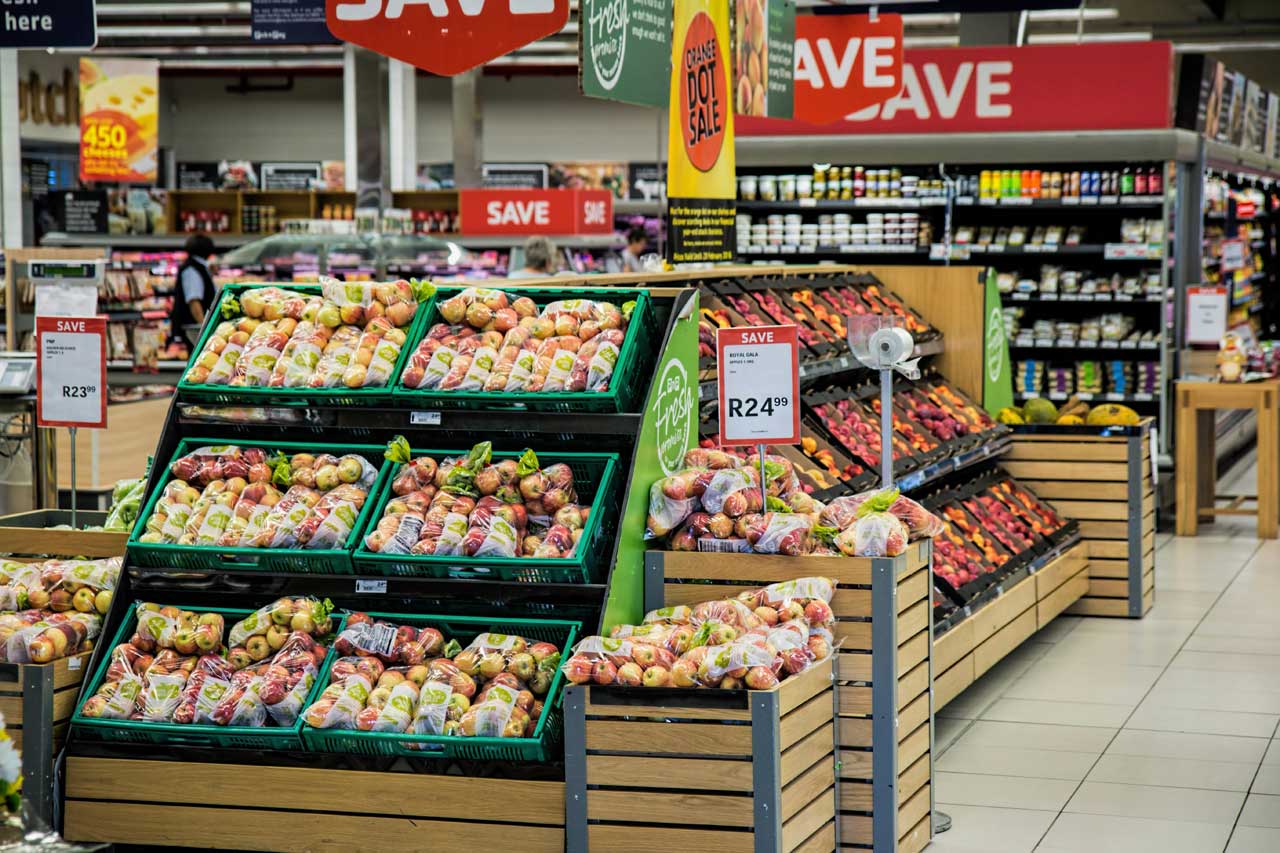
Fresh foods. Pexels Images.
This article presents Walmart’s profitability and profit margin by segment. Walmart’s operating segments consist of three primary units: Walmart U.S., Walmart International, and Sam’s Club U.S.
Let’s take a look!
For other key statistics of Walmart, you may find more resources on these pages:
Revenue
- Revenue by category: net sales and membership income,
- Membership and other income by segment: U.S., International, and Sam’s Club,
- Merchandise sales by segment: U.S., International, and Sam’s Club,
- Revenue by region: U.S. and International
- U.S. sales breakdown: grocery, merchandise, and healthcare
Other Revenue Streams
- eCommerce revenue: U.S., International, and Sam’s Club
- Fuel sales revenue and gasoline profit margin
- Membership revenue: trend, percentage, and growth
Other Statistics
- Capital expenditures breakdown,
- Comparable sales by calendar period,
- Total stores worldwide and locations breakdown by region,
- revenue per store
Comparison with Costco
- Walmart vs Costco: profit margin,
- Walmart vs Costco: U.S. and International profit,
- Walmart vs Costco: total stores and average store size,
Please use the table of contents to navigate this page.
Table Of Contents
Definitions And Overview
O2. What drives the significant profit contribution from Walmart U.S. segment?
Insight & Summary of Observed Trends
Z1. Insight & Summary of Walmart’s Profit Margin By Segment
Profit Margin Statistics
Net Sales By Segment
A1. Walmart U.S., International, and Sam’s Club – Net Sales (Merchandise Sales)
Profit Margin By Segment
A2. Walmart U.S., International, and Sam’s Club – Gross Profit and Margin
A3. Walmart U.S., International, and Sam’s Club – Operating Profit and Margin
Growth
A4. Walmart U.S., International, and Sam’s Club – Net Sales and Profit Growth
Reference, Credits, and Disclosure
S1. References and Credits
S2. Disclosure
Definitions
To help readers understand the content better, the following terms and glossaries have been provided.
Net Sales: Walmart’s net sales refer to the total revenue generated by the company through its retail and eCommerce operations after deducting returns, discounts, and allowances.
This figure excludes membership income and represents the core income from selling goods and services across its segments, including Walmart U.S., Walmart International, and Sam’s Club.
Net sales are a critical metric used to assess the company’s financial performance and operational effectiveness.
Walmart U.S.: Walmart U.S. stands as the company’s largest segment, operating 4,605 stores across the United States, spanning all 50 states, Washington D.C., and Puerto Rico.
As a leading mass merchandiser of consumer products, Walmart U.S. serves customers under the “Walmart” and “Walmart Neighborhood Market” brands, as well as through its digital platform, walmart.com.
With a focus on convenience and integration, Walmart U.S. delivers a seamless omni-channel shopping experience by blending its physical retail locations with eCommerce services.
Nearly all stores offer same-day pickup and delivery options, including features like express delivery within 90 minutes, in-home delivery, and digital pharmacy services.
The Walmart+ membership program enhances this omni-channel approach, offering benefits such as unlimited free shipping with no minimum purchase, unlimited delivery from stores, fuel discounts, mobile Scan & Go capabilities, and exclusive perks for members.
Strategically, Walmart U.S. operates within three core merchandise categories: Grocery, General merchandise, and Health and wellness.
Walmart International: Walmart International ranks as the company’s second largest segment, operating 5,566 stores across 18 countries outside of the United States.
The segment functions through wholly-owned subsidiaries in Canada, Chile, China, and Africa (covering nations such as Botswana, Lesotho, Malawi, Mozambique, Namibia, South Africa, Eswatini, and Zambia), alongside majority-owned subsidiaries in India, and in Mexico and Central America (including Costa Rica, El Salvador, Guatemala, Honduras, and Nicaragua).
Walmart International spans diverse formats under two main categories: retail and wholesale. These include supercenters, supermarkets, warehouse clubs like the membership-only Sam’s Club, cash-and-carry stores, and robust eCommerce offerings via websites and mobile apps like walmart.com.mx, walmart.ca, flipkart.com, PhonePe, and others.
The division’s strategy revolves around “bringing Walmart to the world and the world to Walmart.” This means leveraging its global network and localized expertise to deliver affordable products and services, helping millions of customers and members save money and live better daily.
A seamless omni-channel shopping experience is a cornerstone of Walmart International’s approach, integrating physical retail stores with eCommerce. This includes pickup and delivery services across most markets, with same-day delivery as a prominent feature.
Marketplace expansions also play a significant role, opening doors to enhanced fulfillment and advertising services. Walmart International’s merchandising strategy mirrors the breadth and depth of Walmart U.S., ensuring customers access a wide variety of products.
>br>
Sam’s Club U.S.: Sam’s Club U.S. operates as a membership-only warehouse club with 600 locations across 44 states in the U.S. and Puerto Rico, alongside its online platform, samsclub.com.
Committed to offering a fast and seamless omni-channel experience, Sam’s Club U.S. integrates physical clubs with eCommerce solutions.
Members enjoy convenient services such as curbside pickup for contact-free shopping, the Scan & Go mobile checkout for skipping lines, and the innovative Just Go feature, introduced in fiscal 2025, which enables frictionless exits.
The club provides merchandise across four key categories: Grocery, General merchandise, Health and wellness, and Fuel.
Memberships come with added value, including a spouse/household card at no extra cost. Club members benefit from free curbside pickup for orders of $50 or more, while Plus members enjoy additional perks such as complimentary delivery-from-club, free shipping on $50+ orders, exclusive discounts, convenience features, and early access to shopping before regular hours.
Beginning in fiscal 2023, Sam’s Club U.S. launched a rewards program allowing members to earn Sam’s Cash on purchases, which can be redeemed for cash, used for future purchases, or applied toward membership fees.
Omni-Channel: Omni-channel refers to a strategy in commerce and customer engagement that provides a seamless and integrated experience across all channels, whether they are online, offline, or hybrid. It’s about making every interaction — from browsing products online to visiting a physical store—feel connected and consistent.
For example:
-
In retail, omni-channel could mean a customer can browse products online, reserve an item on a mobile app, and pick it up in-store, all while receiving consistent information and support.
-
In customer service, omni-channel ensures that whether a customer contacts a company via email, chat, phone, or social media, their inquiries and interactions are unified across these platforms.
The key idea is to break down silos between channels and prioritize the customer’s convenience. Businesses that adopt omni-channel approaches often see improved customer satisfaction and loyalty.
What drives the significant profit contribution from Walmart U.S. segment?
The Walmart U.S. segment significantly contributes to the company’s profitability due to several key factors:
-
Scale and Market Penetration: Walmart U.S. operates over 4,600 stores across the country, ensuring that 90% of the U.S. population lives within 10 miles of a Walmart store. This extensive reach allows Walmart to dominate the retail market.
-
Omni-Channel Strategy: The integration of physical stores with e-commerce platforms, such as Walmart.com, enhances customer convenience. Services like same-day pickup, express delivery, and Walmart+ memberships drive both in-store and online sales.
-
Diverse Product Categories: Walmart U.S. focuses on three core merchandise categories — grocery, general merchandise, and health and wellness. Grocery sales, in particular, are a major revenue driver.
-
Cost Leadership: Walmart’s ability to offer low prices through efficient supply chain management and economies of scale attracts a broad customer base, boosting sales and profitability.
-
Membership and Advertising Income: Programs like Walmart+ and the growth of Walmart Connect’s advertising business contribute additional revenue streams.
Although Walmart’s U.S. segment remains the primary driver of its profits, the company has actively sought to expand its sales and enhance profitability in international markets.
Insight & Summary of Walmart’s Profit Margin By Segment
The following analysis consolidates the trends observed across Walmart’s profit margin breakdown by segment for the 2016–2026 period.
-
Walmart U.S. operates as the primary profit engine of the enterprise, characterized by immense scale and steadily improving profitability metrics. Over the latest three periods, the U.S. segment generated an average operating profit of $23,731 million, supported by a healthy 27.2% average gross margin.
-
While its 5.1% average operating margin reflects the inherently competitive nature of domestic retail, the segment demonstrated excellent operational leverage, yielding a 6.8% average operating profit growth rate that outpaced its 4.7% net sales growth over the same timeframe.
-
Conversely, Walmart International and Sam’s Club operate on distinct but complementary margin structures. Following strategic portfolio adjustments, the International segment has rebounded sharply, posting an impressive 23.5% average operating profit growth over the past three years. Despite a slightly lower average operating margin of 4.2%, its accelerated profit expansion highlights improved efficiencies abroad.
-
Meanwhile, Sam’s Club continues to execute its high-volume, low-margin warehouse club model. Functioning with a lean 11.2% average gross margin and a 2.6% operating margin, it nonetheless delivers highly consistent returns, generating an average of $2,346 million in operating profit with a solid 7.6% growth rate. Together, these segments create a diversified profit base capable of funding sustained global investments.
The table below combines Walmart’s net sales and profit margin by segment into a single view for the latest three fiscal years.
Walmart Consolidated Profit Breakdown by Segment 3-Year Averages (FY2024–2026)
| Metric | Walmart U.S. | Walmart International | Sam’s Club U.S. |
|---|---|---|---|
| Net Sales ($ Millions) | $462,402 | $122,316 | $89,811 |
| Gross Profit ($ Millions) | $125,611 | $26,425 | $10,063 |
| Operating Profit ($ Millions) | $23,731 | $5,171 | $2,346 |
| Gross Margin (%) | 27.2% | 21.6% | 11.2% |
| Operating Margin (%) | 5.1% | 4.2% | 2.6% |
| Net Sales Growth (%) | 4.7% | 8.9% | 3.3% |
| Gross Profit Growth (%) | 5.9% | 8.8% | 6.4% |
| Operating Profit Growth (%) | 6.8% | 23.5% | 7.6% |
Walmart U.S., International, and Sam’s Club – Net Sales (Merchandise Sales)
Walmart’s operating segments consist of Walmart U.S., Walmart International and Sam’s Club U.S. The definitions of these segments are available here: Walmart U.S., Walmart International, and Sam’s Club U.S.
Walmart’s profit margin by segment is measured with respect to its net sales. For more information about Walmart’s net sales, you may refer to this section: Walmart’s net sales.
Net Sales by Segment Averages (FY2024–2026)
| Metric | Walmart U.S. | Walmart International | Sam’s Club U.S. |
|---|---|---|---|
| Net Sales Numbers ($ Millions) | $462,402 | $122,316 | $89,811 |
Walmart U.S., International, and Sam’s Club – Gross Profit and Margin
Walmart’s operating segments consist of Walmart U.S., Walmart International and Sam’s Club U.S. The definitions of these segments are available here: Walmart U.S., Walmart International, and Sam’s Club U.S.
Walmart’s profit margin by segment is measured with respect to its net sales. For more information about Walmart’s net sales, you may refer to this section: Walmart’s net sales.
Gross Profit & Margin Averages (FY2024–2026)
| Metric | Walmart U.S. | Walmart International | Sam’s Club U.S. |
|---|---|---|---|
| Gross Profit ($ Millions) | $125,611 | $26,425 | $10,063 |
| Gross Margin (%) | 27.2% | 21.6% | 11.2% |
Walmart U.S., International, and Sam’s Club – Operating Profit and Margin
Walmart’s operating segments consist of Walmart U.S., Walmart International and Sam’s Club U.S. The definitions of these segments are available here: Walmart U.S., Walmart International, and Sam’s Club U.S.
Walmart’s profit margin by segment is measured with respect to its net sales. For more information about Walmart’s net sales, you may refer to this section: Walmart’s net sales.
Operating Profit & Margin Averages (FY2024–2026)
| Metric | Walmart U.S. | Walmart International | Sam’s Club U.S. |
|---|---|---|---|
| Operating Profit ($ Millions) | $23,731 | $5,171 | $2,346 |
| Operating Margin (%) | 5.1% | 4.2% | 2.6% |
Walmart U.S., International, and Sam’s Club – Net Sales and Profit Growth
Walmart’s operating segments consist of Walmart U.S., Walmart International and Sam’s Club U.S. The definitions of these segments are available here: Walmart U.S., Walmart International, and Sam’s Club U.S.
Walmart’s profit margin by segment is measured with respect to its net sales. For more information about Walmart’s net sales, you may refer to this section: Walmart’s net sales.
Net Sales & Profit Growth Averages (FY2024–2026)
| Metric | Walmart U.S. | Walmart International | Sam’s Club U.S. |
|---|---|---|---|
| Net Sales Growth (%) | 4.7% | 8.9% | 3.3% |
| Gross Profit Growth (%) | 5.9% | 8.8% | 6.4% |
| Operating Profit Growth (%) | 6.8% | 23.5% | 7.6% |
References and Credits
1. All financial figures presented were obtained and referenced from Walmart’s annual reports published on the company’s investor relations page: Walmart Investor Relations.
2. Pexels Images.
Disclosure
We may use artificial intelligence (AI) tools to assist us in writing some of the text in this article. However, the data is directly obtained from original sources and meticulously cross-checked by our editors multiple times to ensure its accuracy and reliability.
If you find the information in this article helpful, please consider sharing it on social media. Additionally, providing a link back to this article from any website can help us create more content like this in the future.
Thank you for your support and engagement! Your involvement helps us continue to provide high-quality, reliable content.