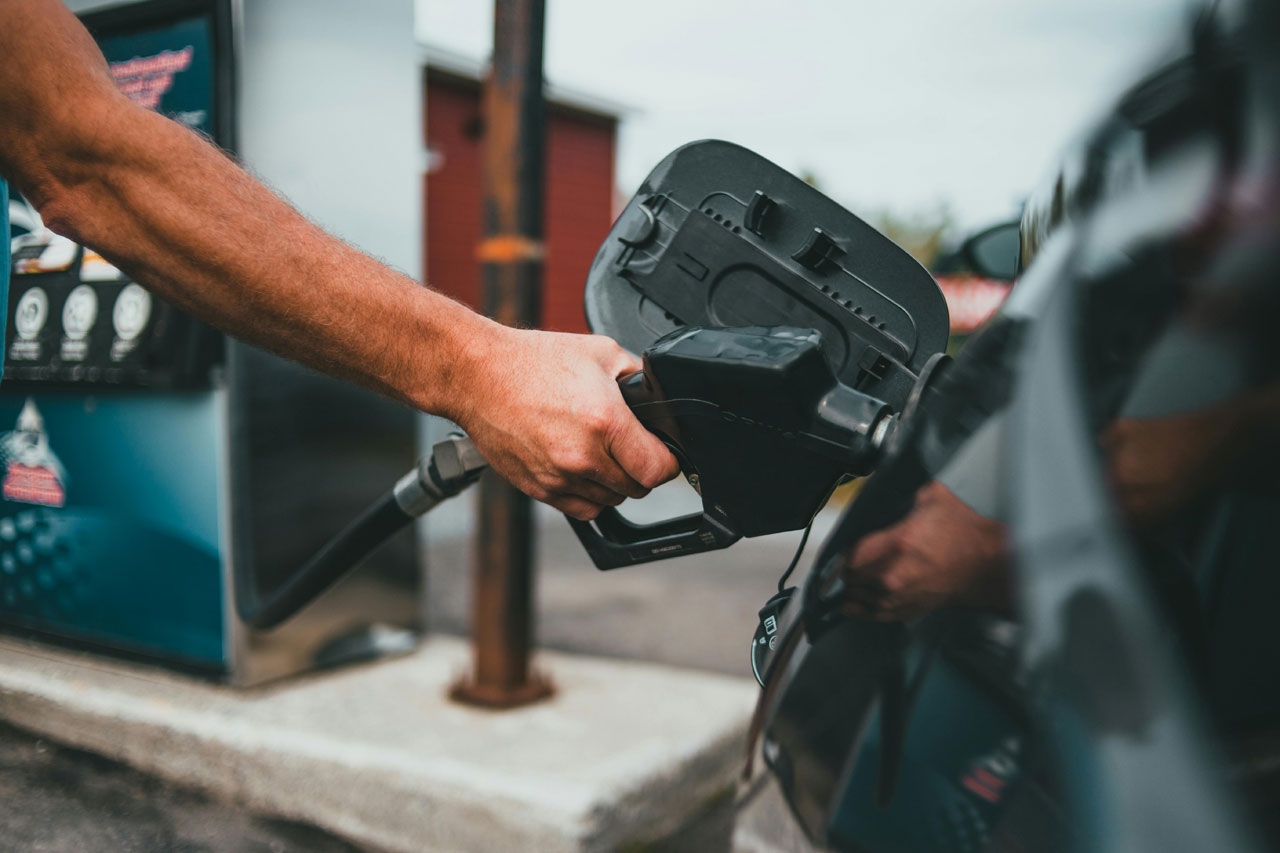
Fuel sales. Pexels Images.
This article presents Walmart’s fuel sales revenue, along with the corresponding profit and margin. Notably, all of Walmart’s fuel revenue is exclusively generated through its Sam’s Club segment.
Let’s look at the details!
For other key statistics of Walmart, you may find more resources on this page: Walmart key stats.
Please use the table of contents to navigate this page.
Table Of Contents
Definitions And Overview
O2. What contributes to the significant growth in Walmart’s fuel revenue?
Insight & Summary of Observed Trends
Z1. Insight & Summary of Walmart’s Fuel Sales Revenue
Sales Revenue
A1. Fuel Sales Revenue, % of Net Sales, and YoY Growth
Profit and Margin
B1. Fuel-Related Expenses, Fuel Profit, and Margin
Reference, Credits, and Disclosure
S1. References and Credits
S2. Disclosure
Definitions
To help readers understand the content better, the following terms and glossaries have been provided.
Walmart Fuel Sales: Walmart’s fuel sales refer to the revenue generated from selling gasoline at its retail locations.
Notably, Walmart does not operate standalone fuel stations under its primary brand; instead, all of its fuel revenue comes from Sam’s Club, its membership-based warehouse segment.
Sam’s Club fuel centers often offer discounted gasoline prices to attract customers into its stores. Additionally, Walmart Plus members receive fuel discounts at select Walmart, Murphy, Exxon, and Mobil stations.
Sam’s Club U.S.: Sam’s Club U.S. operates as a membership-only warehouse club with 600 locations across 44 states in the U.S. and Puerto Rico, alongside its online platform, samsclub.com.
Committed to offering a fast and seamless omni-channel experience, Sam’s Club U.S. integrates physical clubs with eCommerce solutions.
Members enjoy convenient services such as curbside pickup for contact-free shopping, the Scan & Go mobile checkout for skipping lines, and the innovative Just Go feature, introduced in fiscal 2025, which enables frictionless exits.
The club provides merchandise across four key categories: Grocery, General merchandise, Health and wellness, and Fuel.
Memberships come with added value, including a spouse/household card at no extra cost. Club members benefit from free curbside pickup for orders of $50 or more, while Plus members enjoy additional perks such as complimentary delivery-from-club, free shipping on $50+ orders, exclusive discounts, convenience features, and early access to shopping before regular hours.
Beginning in fiscal 2023, Sam’s Club U.S. launched a rewards program allowing members to earn Sam’s Cash on purchases, which can be redeemed for cash, used for future purchases, or applied toward membership fees.
Omni-Channel: Omni-channel refers to a strategy in commerce and customer engagement that provides a seamless and integrated experience across all channels, whether they are online, offline, or hybrid. It’s about making every interaction — from browsing products online to visiting a physical store—feel connected and consistent.
For example:
-
In retail, omni-channel could mean a customer can browse products online, reserve an item on a mobile app, and pick it up in-store, all while receiving consistent information and support.
-
In customer service, omni-channel ensures that whether a customer contacts a company via email, chat, phone, or social media, their inquiries and interactions are unified across these platforms.
The key idea is to break down silos between channels and prioritize the customer’s convenience. Businesses that adopt omni-channel approaches often see improved customer satisfaction and loyalty.
What contributes to the significant growth in Walmart’s fuel revenue?
Walmart’s fuel revenue has seen significant growth due to several key factors:
-
Expansion of Fuel Sites:
-
Walmart has aggressively expanded its fuel station footprint, reaching 400 locations by late 2024 and aiming for 450 by the end of 2025.
-
The company is integrating fuel stations into more Supercenter stores, increasing accessibility for customers.
-
-
Increased Market Share & Volume Growth:
-
Walmart’s share of the U.S. gasoline market has doubled over the past seven years.
-
The company has focused on higher throughput, meaning its fuel sites are selling more gallons per location.
-
Walmart’s fuel brand efficiency rating has nearly doubled, indicating stronger performance compared to the national average.
-
-
Competitive Pricing Strategy:
-
Walmart has widened its fuel price discounts over time, offering prices three times lower than they were seven years ago.
-
In 2017, Walmart’s fuel was 6 cents per gallon below market average, but in 2024, the discount increased to 19 cents per gallon.
-
Walmart+ members receive additional fuel savings, further driving customer loyalty.
-
-
Convenience Store Strategy:
-
Walmart is evolving into a major convenience retailer, leveraging fuel stations to attract customers to its stores.
-
The company has introduced walk-in convenience stores at fuel sites, offering low-cost beverages and snacks.
-
Walmart’s fuel centers reinforce its “Save Money. Live Better” brand positioning.
-
-
Inflation & Consumer Behavior:
-
Rising fuel prices have made discounted gas more attractive, driving more customers to Walmart’s fuel stations.
-
Walmart’s ability to offer lower fuel prices has positioned it as a preferred choice for budget-conscious consumers.
-
These factors have collectively driven Walmart’s soaring fuel revenue over the years.
Insight & Summary of Walmart’s Fuel Sales Revenue
The following analysis consolidates the trends observed across Walmart’s fuel revenue for the 2014–2026 period.
-
Sam’s Club fuel revenue has been one of the more volatile line items within Walmart’s financial profile, swinging from a low of $4.1B in 2017 to a peak of $12.7B in 2023 — a three-fold variation driven almost entirely by global crude oil price cycles rather than volume dynamics.
-
As a percentage of Sam’s Club net sales, fuel revenue has ranged from 7.1% to 15.0%, with the 2023 peak reflecting the sustained elevation of fuel prices in the post-pandemic inflationary environment. The subsequent decline to $9.3B and 10.0% of net sales by 2026 represents a normalization toward the lower end of the historical range, consistent with moderating fuel prices rather than any structural deterioration in Sam’s Club’s fuel station network or member utilization.
-
The growth profile of fuel revenue has been correspondingly erratic — recording a 84.0% surge in 2022 and a 45.8% increase in 2023 at the peak of the price cycle, before contracting sharply by 12.3%, 5.9%, and 11.4% in 2024, 2025, and 2026 respectively. This volatility is an inherent characteristic of fuel retailing and underscores the importance of analyzing Sam’s Club’s underlying merchandise comparable sales on a fuel-excluded basis to avoid misreading the segment’s operational trajectory.
-
The fuel-excluded net sales figures reveal a consistently growing core business that is less susceptible to commodity-driven distortions — a distinction that carries significant weight in any assessment of Sam’s Club’s normalized earnings power. Fuel profitability data, available from 2023 onward, reveals a structurally thin but improving margin profile.
-
Fuel profit margin expanded from 4.6% in 2023 to 6.2% in 2026, while absolute fuel profit grew modestly from $580M to $571M — with the 2026 figure representing a slight decline in absolute terms despite margin expansion, owing to the lower revenue base. The improving margin trend is encouraging and likely reflects a combination of favorable wholesale-to-retail fuel price spreads and the operational efficiency of Sam’s Club’s high-throughput fuel stations.
-
In the context of the broader Sam’s Club business, fuel remains a strategically important member traffic driver and a meaningful revenue contributor, but its thin absolute margins confirm that its primary value lies in member acquisition and retention rather than as a direct profit engine.
The table below combines the Walmart’s fuel revenue, growth, and mix into a single view for the latest three fiscal years.
Walmart (Sam’s Club) Consolidated Fuel Metrics 3-Year Averages (FY2024–2026)
| Metric | Average (Latest 3 Periods) |
|---|---|
| Fuel Revenue & Growth | |
| Fuel Sales Revenue ($ Millions) | $10,285 |
| Fuel Sales as % of Sam’s Club Net Sales | 11.5% |
| Fuel YoY Growth (%) | -9.9% |
| Fuel Profitability | |
| Fuel-Related Expenses ($ Millions) | $9,733 |
| Fuel Profit ($ Millions) | $551 |
| Fuel Profit Margin (%) | 5.4% |
Fuel Sales Revenue, % of Net Sales, and YoY Growth
View data as table
Walmart Sam's Club Fuel Revenue, Percentage, and Growth — All Metrics by Fiscal Year
| Fiscal Year | Fuel Sales Revenue | Fuel Sales as % of Sam's Club's Net Sales | Fuel Sales Growth |
|---|---|---|---|
| 2014 | $6,583M | 11.5% | n.a. |
| 2015 | $6,390M | 11.0% | -2.9% |
| 2016 | $4,498M | 7.9% | -29.6% |
| 2017 | $4,076M | 7.1% | -9.4% |
| 2018 | $4,760M | 8.0% | 16.8% |
| 2019 | $5,507M | 9.5% | 15.7% |
| 2020 | $6,000M | 10.2% | 9.0% |
| 2021 | $4,726M | 7.4% | -21.2% |
| 2022 | $8,696M | 11.8% | 84.0% |
| 2023 | $12,680M | 15.0% | 45.8% |
| 2024 | $11,122M | 12.9% | -12.3% |
| 2025 | $10,461M | 11.6% | -5.9% |
| 2026 | $9,271M | 10.0% | -11.4% |
Walmart derives its fuel revenue entirely from Sam’s Club. You may find more information about the segment here: Sam’s Club U.S. For the definition of Walmart’s fuel sales, you may refer to this section: Walmart fuel sales.
Fuel Revenue & Growth Averages (FY2024–2026)
| Metric | Average (Latest 3 Periods) |
|---|---|
| Fuel Sales Revenue ($ Millions) | $10,285 |
| Fuel Sales as % of Sam’s Club Net Sales | 11.5% |
| Fuel YoY Growth (%) | -9.9% |
Fuel-Related Expenses, Fuel Profit, and Margin
View data as table
Walmart Sam's Club Fuel-Related Expenses and Profit Margin — All Metrics by Fiscal Year
| Fiscal Year | Fuel-Related Expenses | Fuel Profit | Fuel Profit Margin |
|---|---|---|---|
| 2023 | $12,100M | $580M | 4.6% |
| 2024 | $10,600M | $522M | 4.7% |
| 2025 | $9,900M | $561M | 5.4% |
| 2026 | $8,700M | $571M | 6.2% |
Walmart derives its fuel revenue entirely from Sam’s Club. You may find more information about the segment here: Sam’s Club U.S. For the definition of Walmart’s fuel sales, you may refer to this section: Walmart fuel sales.
Fuel Profitability Averages (FY2024–2026)
| Metric | Average (Latest 3 Periods) |
|---|---|
| Fuel-Related Expenses ($ Millions) | $9,733 |
| Fuel Profit ($ Millions) | $551 |
| Fuel Profit Margin (%) | 5.4% |
References and Credits
1. All financial figures presented were obtained and referenced from Walmart’s annual reports published on the company’s investor relations page: Walmart Investor Relations.
2. Pexels Images.
Disclosure
We may use artificial intelligence (AI) tools to assist us in writing some of the text in this article. However, the data is directly obtained from original sources and meticulously cross-checked by our editors multiple times to ensure its accuracy and reliability.
If you find the information in this article helpful, please consider sharing it on social media. Additionally, providing a link back to this article from any website can help us create more content like this in the future.
Thank you for your support and engagement! Your involvement helps us continue to provide high-quality, reliable content.