
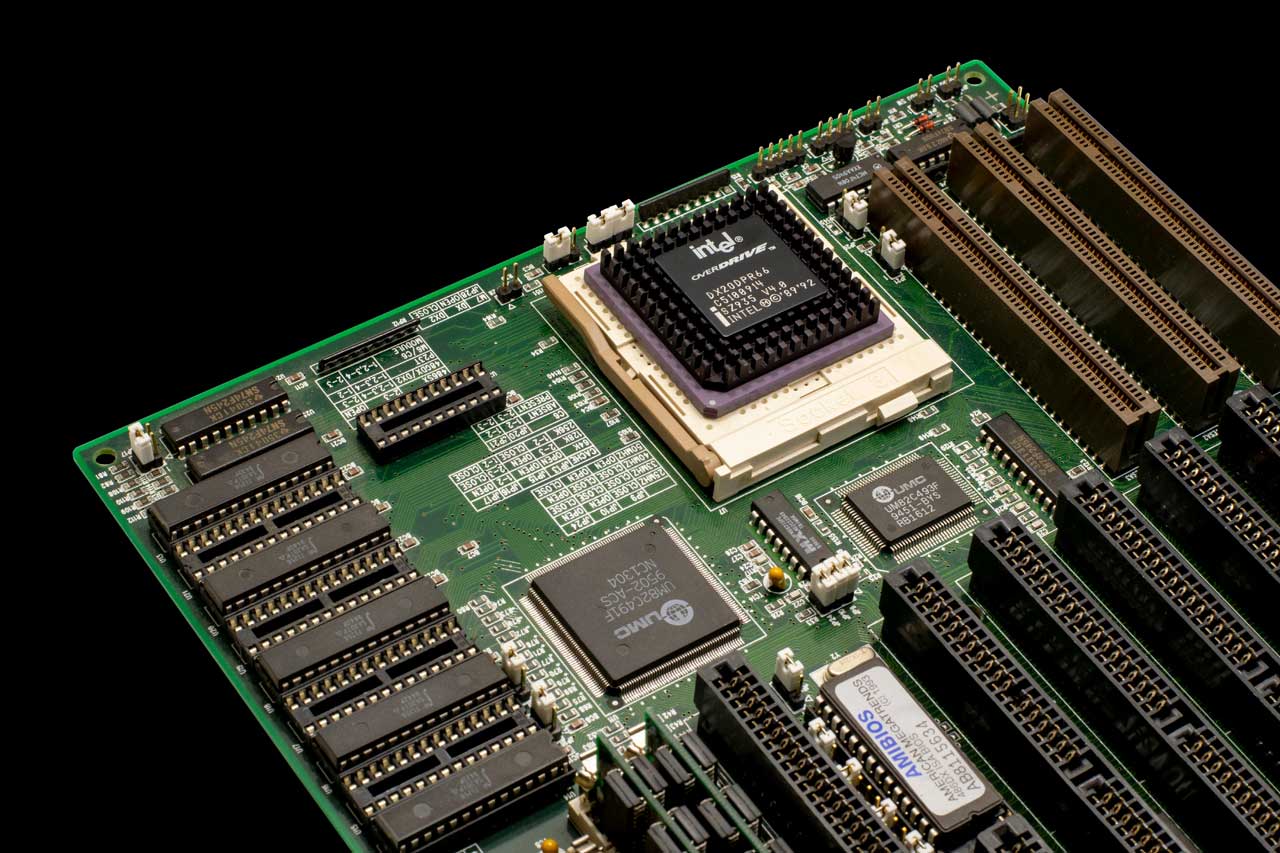
Microchips. Pexels Image.
This article details the revenue distribution of Taiwan Semiconductor Manufacturing Company Limited (TSMC) across the United States, China, Taiwan, Japan, and the EMEA region. These countries are highlighted due to their substantial revenue contributions.
Let’s look at the numbers!
For other key statistics of TSMC, you may find more information on the following page: TSMC key statistics.
Please use the table of contents to navigate this page.
Table Of Contents
Definitions And Overview
O2. What is driving TSMC’s substantial revenue from the U.S.?
Insight & Summary of Observed Trends
Z1. Insight & Summary of TSMC’s Revenue By Country
Revenue By Country
A1. Revenue Numbers ($TWD): U.S., China, Taiwan, Japan, EMEA, Others, and Total
A2. Revenue Numbers ($USD): U.S., China, Taiwan, Japan, EMEA, Others, and Total
Revenue Mix By Country
B1. Revenue Mix: U.S., China, Taiwan, Japan, EMEA, and Others
Revenue Growth By Country
C1. Revenue Growth: U.S., China, Taiwan, Japan, EMEA, Others, and Total
Reference, Credits, and Disclosure
S1. References and Credits
S2. Disclosure
Definitions
To help readers understand the content better, the following terms and glossaries have been provided.
New Taiwan Dollar (TWD): The New Taiwan Dollar (TWD), abbreviated as NT$, is the official currency of Taiwan.
It is used in all forms of transactions within the country, from daily expenses to business dealings. The New Taiwan Dollar is issued by the Central Bank of the Republic of China (Taiwan) and is subdivided into 100 cents.
Its symbol is NT$, and it is known for its stability and wide acceptance in the region. The exchange rate of TWD to USD is NT$1,000 to US$30.30.
EMEA: EMEA stands for Europe, Middle East, and Africa.
Revenue By Country: TSMC categorizes its net revenue mainly based on the countries where the customers are headquartered, which may be different from the countries to which it actually sells or ships its products or different from where products are actually ordered.
What is driving TSMC’s substantial revenue from the U.S.?
TSMC’s substantial revenue from the U.S. can be attributed to several key factors:
- Strong Demand for Advanced Semiconductors: The U.S. is home to many leading technology companies that require advanced semiconductors for their products, including smartphones, computers, and data centers. TSMC’s cutting-edge technology and high-performance chips are in high demand.
- Strategic Partnerships: TSMC has established strong partnerships with major U.S. tech companies like Apple, Nvidia, and Qualcomm. These partnerships ensure a steady stream of orders and revenue.
- Investment in U.S. Facilities: TSMC has made significant investments in the U.S., including the construction of a new fabrication plant in Arizona. This not only strengthens its presence in the U.S. market but also ensures a reliable supply chain and reduces dependency on other regions.
- Government Support: The U.S. government has shown support for domestic semiconductor manufacturing to reduce reliance on foreign suppliers. This has led to favorable policies and incentives for companies like TSMC to expand their operations in the U.S.
These factors combined have driven TSMC’s substantial revenue from the U.S. market.
Insight & Summary of TSMC’s Revenue By Country
The following analysis consolidates the trends observed across TSMC’s revenue by country for the 2018–2025 period.
-
TSMC’s total revenue grew from NT$1,031B ($33.0B) in 2018 to NT$3,809B ($121.9B) in 2025 — a 3.7x expansion in eight years that reflects the compounding demand for advanced semiconductor manufacturing across smartphones, AI accelerators, high-performance computing, and automotive applications. Growth has been broadly positive throughout the period, with the notable exception of 2023’s -4.5% contraction — a cyclical correction driven by post-pandemic inventory digestion across the consumer electronics supply chain — before a robust recovery to 33.9% and 31.6% in 2024 and 2025 respectively.
-
The 2024 and 2025 re-acceleration is underpinned almost entirely by AI-driven demand for TSMC’s most advanced process nodes, and represents the strongest consecutive growth performance since 2021 and 2022 — confirming that AI compute infrastructure buildout has provided a durable and structurally significant demand impulse beyond the cyclical consumer electronics recovery.
-
The United States has been and remains the dominant revenue geography by a wide and widening margin, growing from NT$633B ($20.3B) in 2018 to NT$2,835B ($90.7B) in 2025 — a 4.5x expansion — while simultaneously expanding its revenue share from 61.4% to 74.4%. The rising U.S. concentration is the most consequential geographic trend in the dataset and reflects the fact that TSMC’s largest and most sophisticated fabless customers — including Apple, Nvidia, AMD, Qualcomm, and Broadcom — are predominantly U.S.-headquartered companies whose demand for leading-edge nodes has compounded dramatically, particularly as AI accelerator orders have surged.
-
The 42.3% growth in U.S.-origin revenue in 2025 — the strongest absolute dollar growth of any region in any year — confirms that North American customer demand is the primary engine of TSMC’s current growth cycle and that the concentration of revenue toward U.S. customers is a structural feature of the leading-edge semiconductor industry rather than a transitional dynamic.
-
China has been the most strategically complex and politically sensitive revenue geography in the dataset. Revenue from Chinese customers grew from NT$176B ($5.6B) in 2018 to NT$267B ($8.5B) in 2023, with its share ranging between 8.6% and 19.4% — peaking at 19.4% in 2019 before declining sharply to 10.4% in 2021 following U.S. export restrictions on Huawei and other Chinese technology companies. The partial recovery of China’s share to 12.4% by 2023 reflected the continued business from non-restricted Chinese customers, including smartphone OEMs and automotive chipmakers.
-
By 2025, China’s revenue share has compressed further to 8.6% — its lowest level in the dataset — as U.S. export controls have broadened and TSMC has reduced its exposure to advanced node customers in China. The modest absolute revenue decline of -1.3% in 2025 to NT$328B ($10.5B), while contained, signals that China’s contribution is being actively managed downward in response to geopolitical constraints rather than demand weakness from the remaining eligible customer base.
-
Taiwan’s revenue share has been volatile but generally range-bound — expanding from 7.6% in 2018 to a peak of 12.8% in 2021 during the domestic capacity absorption phase, before normalizing to 7.9% in 2025. The 2024 spike in Taiwan revenue growth of 80.5% — the highest single-country growth rate in the dataset that year — reflects the surge in domestic orders from TSMC’s Taiwanese customers during the AI-driven demand wave, before moderating to 10.7% in 2025. Japan has maintained a stable 3.9–6.1% revenue share throughout, with its growth rates relatively contained and consistent — benefiting from the geographic proximity of leading Japanese semiconductor and electronics customers.
-
EMEA has declined from 6.9% of revenue in 2018 to 3.3% in 2025, reflecting the relative underrepresentation of European fabless companies at the most advanced process nodes and TSMC’s customer mix increasingly concentrating in U.S. and Asian technology companies. The Others category — encompassing all remaining geographies — has fluctuated between 1.5% and 4.0% of revenue, with no consistent directional trend.
-
The overarching geographic narrative is one of accelerating concentration: the United States now accounts for nearly three-quarters of TSMC’s revenue, a level that reflects both the extraordinary scale of U.S. AI and semiconductor demand and the increasingly bifurcated nature of the global advanced semiconductor supply chain along geopolitical lines.
The table below combines all TSMC’s revenue by country metrics into a single view for the latest 3 periods.
TSMC Revenue Consolidated Averages (FY2023–2025)
| Metric | Average (2023-2025) |
|---|---|
| Revenue Numbers (NT$ Billions) | |
| United States | 2,078.7 |
| China | 309.0 |
| Taiwan | 239.7 |
| Japan | 142.0 |
| EMEA | 115.7 |
| Others | 70.0 |
| Total Revenue | 2,955.0 |
| Revenue Numbers (US$ Billions) | |
| United States | 66.5 |
| China | 9.9 |
| Taiwan | 7.7 |
| Japan | 4.5 |
| EMEA | 3.7 |
| Others | 2.3 |
| Total Revenue | 94.6 |
| Revenue Mix (%) | |
| United States | 69.5% |
| China | 10.8% |
| Taiwan | 8.0% |
| Japan | 5.0% |
| EMEA | 4.1% |
| Others | 2.5% |
| Revenue Growth (%) | |
| United States | 26.0% |
| China | 10.6% |
| Taiwan | 20.8% |
| Japan | 8.1% |
| EMEA | 1.9% |
| Others | 4.8% |
| Total Revenue | 20.3% |
Revenue Numbers ($TWD): U.S., China, Taiwan, Japan, EMEA, Others, and Total
View data as table
TSMC Revenue by Country (NT$) — All Countries by Fiscal Year
| Fiscal Year | United States | China | Taiwan | Japan | EMEA | Others | Total Country |
|---|---|---|---|---|---|---|---|
| 2018 | NT$633B | NT$176B | NT$78B | NT$58B | NT$71B | NT$15B | NT$1,031B |
| 2019 | NT$635B | NT$208B | NT$84B | NT$57B | NT$68B | NT$18B | NT$1,070B |
| 2020 | NT$818B | NT$234B | NT$129B | NT$63B | NT$70B | NT$25B | NT$1,339B |
| 2021 | NT$1,016B | NT$165B | NT$204B | NT$72B | NT$89B | NT$42B | NT$1,587B |
| 2022 | NT$1,493B | NT$245B | NT$210B | NT$119B | NT$124B | NT$72B | NT$2,264B |
| 2023 | NT$1,409B | NT$267B | NT$150B | NT$132B | NT$117B | NT$87B | NT$2,162B |
| 2024 | NT$1,992B | NT$332B | NT$270B | NT$144B | NT$103B | NT$53B | NT$2,894B |
| 2025 | NT$2,835B | NT$328B | NT$299B | NT$150B | NT$127B | NT$70B | NT$3,809B |
The definition of TSMC’s revenue by country is available here: revenue by country and EMEA.
TSMC reports its financial statements primarily in New Taiwan Dollars (TWD). You can find more information about the currency exchange rates between TWD and the US dollar here: New Taiwan Dollar (TWD).
Average Revenue Numbers (NT$ Billions) (FY2023–2025)
| Country/Region | Average (2023-2025) |
|---|---|
| United States | 2,078.7 |
| China | 309.0 |
| Taiwan | 239.7 |
| Japan | 142.0 |
| EMEA | 115.7 |
| Others | 70.0 |
| Total Revenue | 2,955.0 |
Revenue Numbers ($USD): U.S., China, Taiwan, Japan, EMEA, Others, and Total
View data as table
TSMC Revenue by Country (US$) — All Countries by Fiscal Year
| Fiscal Year | United States | China | Taiwan | Japan | EMEA | Others | Total Country |
|---|---|---|---|---|---|---|---|
| 2018 | $20.3B | $5.6B | $2.5B | $1.9B | $2.3B | $0.5B | $33.0B |
| 2019 | $20.3B | $6.7B | $2.7B | $1.8B | $2.2B | $0.6B | $34.2B |
| 2020 | $26.2B | $7.5B | $4.1B | $2.0B | $2.2B | $0.8B | $42.9B |
| 2021 | $32.5B | $5.3B | $6.5B | $2.3B | $2.8B | $1.3B | $50.8B |
| 2022 | $47.8B | $7.8B | $6.7B | $3.8B | $4.0B | $2.3B | $72.4B |
| 2023 | $45.1B | $8.5B | $4.8B | $4.2B | $3.8B | $2.8B | $69.2B |
| 2024 | $63.8B | $10.6B | $8.7B | $4.6B | $3.3B | $1.7B | $92.6B |
| 2025 | $90.7B | $10.5B | $9.6B | $4.8B | $4.1B | $2.3B | $121.9B |
The definition of TSMC’s revenue by country is available here: revenue by country and EMEA.
The conversion from New Taiwan Dollars (TWD) to USD is 0.032.
Average Revenue Numbers (US$ Billions) (FY2023–2025)
| Country/Region | Average (2023-2025) |
|---|---|
| United States | 66.5 |
| China | 9.9 |
| Taiwan | 7.7 |
| Japan | 4.5 |
| EMEA | 3.7 |
| Others | 2.3 |
| Total Revenue | 94.6 |
Revenue Mix: U.S., China, Taiwan, Japan, EMEA, and Others
View data as table
TSMC Revenue Mix by Country — All Countries by Fiscal Year
| Fiscal Year | United States | China | Taiwan | Japan | EMEA | Others |
|---|---|---|---|---|---|---|
| 2018 | 61.4% | 17.0% | 7.6% | 5.6% | 6.9% | 1.5% |
| 2019 | 59.3% | 19.4% | 7.9% | 5.4% | 6.3% | 1.7% |
| 2020 | 61.1% | 17.5% | 9.6% | 4.7% | 5.2% | 1.9% |
| 2021 | 64.0% | 10.4% | 12.8% | 4.5% | 5.6% | 2.6% |
| 2022 | 66.0% | 10.8% | 9.3% | 5.3% | 5.5% | 3.2% |
| 2023 | 65.2% | 12.4% | 6.9% | 6.1% | 5.4% | 4.0% |
| 2024 | 68.8% | 11.5% | 9.3% | 5.0% | 3.6% | 1.8% |
| 2025 | 74.4% | 8.6% | 7.9% | 3.9% | 3.3% | 1.8% |
Average Revenue Mix (%) (FY2023–2025)
| Country/Region | Average (2023-2025) |
|---|---|
| United States | 69.5% |
| China | 10.8% |
| Taiwan | 8.0% |
| Japan | 5.0% |
| EMEA | 4.1% |
| Others | 2.5% |
Revenue Growth: U.S., China, Taiwan, Japan, EMEA, Others, and Total
View data as table
TSMC Revenue Growth by Country — All Countries by Fiscal Year
| Fiscal Year | United States | China | Taiwan | Japan | EMEA | Others | Total Country |
|---|---|---|---|---|---|---|---|
| 2019 | 0.3% | 18.4% | 7.7% | -1.1% | -4.9% | 16.1% | 3.7% |
| 2020 | 28.9% | 12.3% | 53.2% | 10.1% | 3.9% | 39.6% | 25.2% |
| 2021 | 24.2% | -29.6% | 58.0% | 13.6% | 26.8% | 68.1% | 18.5% |
| 2022 | 47.0% | 49.0% | 3.2% | 65.6% | 39.0% | 71.7% | 42.6% |
| 2023 | -5.7% | 9.0% | -28.8% | 10.9% | -5.2% | 20.1% | -4.5% |
| 2024 | 41.4% | 24.2% | 80.5% | 9.2% | -12.4% | -38.8% | 33.9% |
| 2025 | 42.3% | -1.3% | 10.7% | 4.3% | 23.2% | 33.0% | 31.6% |
Average Revenue Growth (%) (FY2023–2025)
| Country/Region | Average (2023-2025) |
|---|---|
| United States | 26.0% |
| China | 10.6% |
| Taiwan | 20.8% |
| Japan | 8.1% |
| EMEA | 1.9% |
| Others | 4.8% |
| Total Revenue | 20.3% |
Credits and References
1. All financial figures presented were obtained and referenced from TSMC’s annual reports published on the company’s investor relations page: TSMC Annual Reports.
2. Pexels Images.
Back To Table Of Contents
Disclosure
We may utilize the assistance of artificial intelligence (AI) tools to produce some of the text in this article. However, the data is directly obtained from original sources (usually the company’s quarterly and annual reports) and meticulously cross-checked by our editors multiple times to ensure its accuracy and reliability.
If you find the information in this article helpful, please consider sharing it on social media. Additionally, providing a link back to this article from any website can help us create more content like this in the future.
Thank you for your support and engagement! Your involvement helps us continue to provide high-quality, reliable content.