
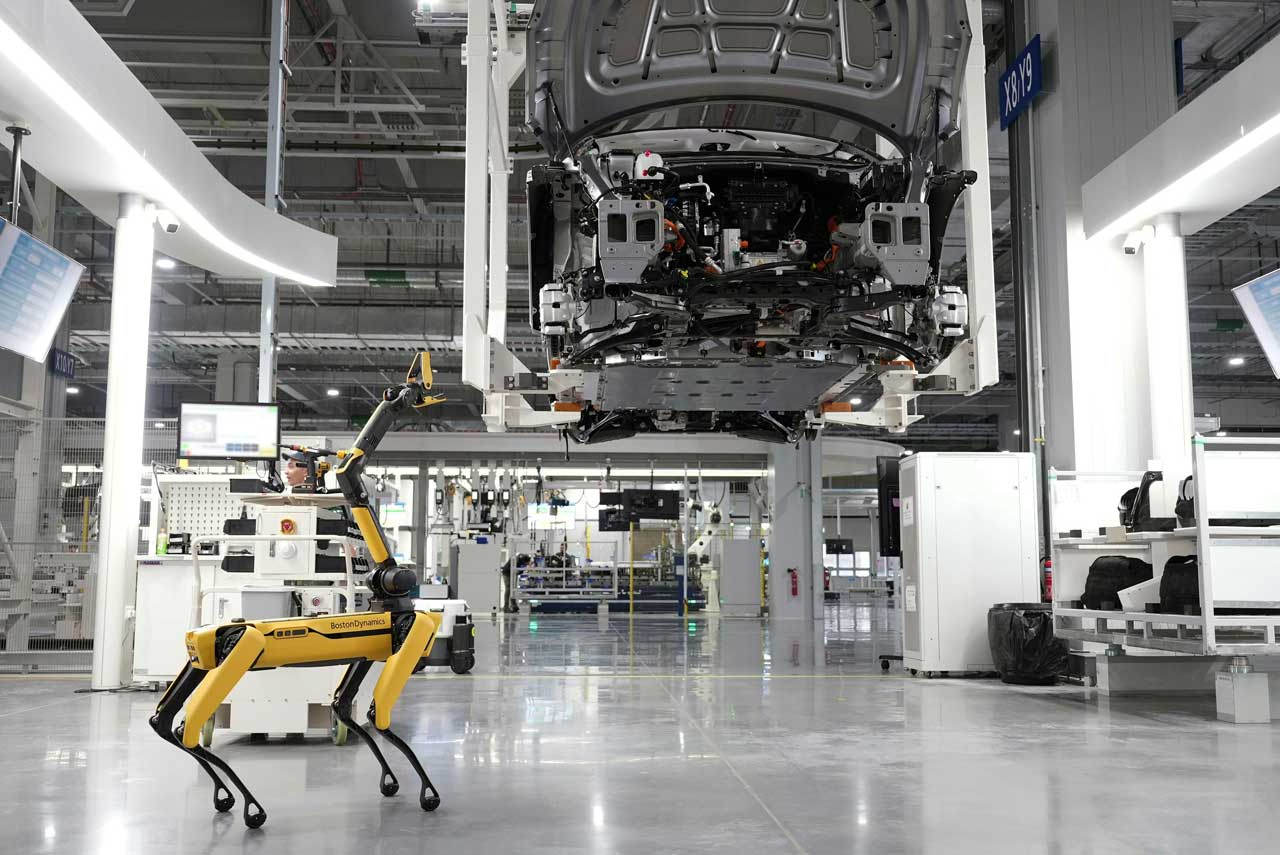
Robotics. Pexels Image.
BYD and Tesla are two of the biggest players in the electric vehicle (EV) market, but they have distinct approaches and strengths.
BYD (Build Your Dreams) was founded in 1995 in China, initially as a battery manufacturer before expanding into EVs. Tesla, founded in 2003 in the U.S., revolutionized the EV industry with its high-performance electric cars.
Tesla is known for its premium EVs, focusing on high-end technology and performance. BYD, on the other hand, offers a wider range of affordable EVs, making electric mobility more accessible.
In this article, we will look into the research and development (R&D) spending of Tesla and BYD. Apart from the R&D figures, we also explore several R&D ratios, such as the R&D to revenue, R&D to operating expenses, and more.
Let’s get started!
For other key statistics of BYD and Tesla, you may find more resources on these pages: BYD key stats and Tesla key stats.
Please use the table of contents to navigate this page.
Table Of Contents
Definitions And Overview
- R&D To Revenue Ratio
- R&D To Operating Expenses Ratio
- Stock-Based Payments for R&D
- Currency Conversion: Yuan to USD
Insight & Summary of Observed Trends
Z1. Insight & Summary of BYD and Tesla’s R&D Comparison
R&D Statistics
BYD vs Tesla
A1. R&D Spending ($US and $CNY)
A2. R&D Growth
A3. R&D to Revenue Ratio
A4. R&D to Gross Profit Ratio
A5. R&D to OpEx Ratio
A6. R&D as % of Stock-Based Expense
Reference, Credits, and Disclosure
S1. References and Credits
S2. Disclosure
Definitions
To help readers understand the content better, the following terms and glossaries have been provided.
R&D To Revenue Ratio: The ratio of Research and Development (R&D) to revenue is a financial metric measuring the proportion of a company’s revenue invested in research and development activities. It is calculated by dividing the company’s R&D expenses by its total revenue over a specific period.
This ratio is crucial for understanding how much of a company’s sales are reinvested into developing new products, services, or processes. A higher ratio may indicate a company heavily investing in innovation with the expectation of future growth and competitive advantage. In comparison, a lower ratio could suggest a focus on current operations and profitability.
This metric is particularly relevant in technology, pharmaceuticals, and other industries where ongoing R&D is critical for maintaining a competitive edge.
R&D To Operating Expenses Ratio: The R&D to Operating Expenses Ratio is a financial metric that measures the proportion of a company’s research and development (R&D) expenses to its total operating expenses.
This ratio is significant because it indicates how much of a company’s resources are allocated to R&D activities compared to other operational costs.
A higher ratio suggests that the company is investing more resources in innovation and development, which could indicate a focus on long-term growth and competitiveness.
This metric is particularly relevant in industries where innovation and technological advancement are crucial, such as pharmaceuticals, technology, and biotechnology.
Stock-Based Payments for R&D: Stock-based payments for R&D refer to compensation given in the form of stock options or equity grants to employees, contractors, or partners involved in research and development activities.
These payments are used to incentivize innovation and align the interests of employees with the company’s long-term growth.
Companies account for stock-based compensation under ASC 718, which requires them to recognize the fair value of stock-based payments as an expense in their financial statements.
This expense is typically spread over the vesting period of the stock awards. In the context of R&D, stock-based payments help attract top talent and encourage long-term commitment to technological advancements.
Currency Conversion: Yuan to USD: The exchange rate I used for converting the Chinese Yuan to USD and vice versa is 6.79 CN¥ for 1 USD.
Insight & Summary of BYD and Tesla’s R&D Comparison
The following analysis consolidates the trends observed across BYD and Tesla in R&D comparison, consisting of R&D spending, growth, and several ratios for the 2019–2025 period.
-
BYD has overtaken Tesla in absolute R&D spending — and the gap is widening rapidly. BYD’s R&D spend grew from $827M in 2019 to $8,523M in 2025, a 931% increase over six years. Tesla’s spend grew from $1,343M to $6,411M — a 377% increase over the same period. The 3-year averages confirm the reversal: BYD at $7,387M versus Tesla at $4,973M — BYD spending 48.5% more on R&D annually. As recently as 2021, Tesla outspent BYD more than 2:1 ($2,593M vs. $1,175M). The crossover occurred in FY2023, when BYD’s $5,818M surpassed Tesla’s $3,969M for the first time — and BYD has expanded the gap in every subsequent year. In CNY terms, BYD’s 3-year average of ¥50,249M versus Tesla’s ¥33,769M confirms this is not a currency artefact.
-
The FY2022–2023 BYD R&D acceleration is extraordinary and structurally significant. BYD’s R&D spend grew 133.4% in FY2022 and 112.2% in FY2023 — back-to-back years of more-than-doubling. These two years added approximately $4,900M of annual R&D run-rate in just 24 months, representing one of the most rapid R&D ramp-ups in the automotive industry’s history. The catalyst was BYD’s strategic recognition that its NEV product expansion, battery technology advancement (Blade Battery, e6 platform), software-defined vehicle architecture, and growing EV intelligence requirements all demanded simultaneous investment. The 3-year average BYD growth of 51.9% significantly outpaces Tesla’s 28.2% — but both decelerate from the 2022–2023 acceleration as bases grow larger.
-
R&D intensity (as a share of revenue) has converged — but from opposite directions. BYD’s R&D-to-revenue ratio has risen from 4.4% (2019) to 7.2% (2025), while Tesla’s has followed a more volatile path — peaking at 5.5% in 2019, falling to 3.8% in 2022 (as revenue surged), then rebounding to 6.8% in 2025. The 3-year averages — BYD 6.9% versus Tesla 5.2% — show BYD now spending more of its revenue on R&D than Tesla, a notable shift given that BYD’s revenue base is now larger. Tesla’s FY2025 jump to 6.8% (from 4.6% in 2024) reflects both a meaningful R&D budget increase and declining revenue in the same year — the two factors reinforcing each other in the ratio.
-
R&D-to-gross-profit is the metric most revealing of each company’s financial capacity to sustain R&D investment. BYD’s ratio has risen from 27.0% (2019) to 40.6% (2025), averaging 37.1% over 2023–2025 — meaning BYD is committing more than one-third of every gross profit dollar to R&D. Tesla’s ratio also rose sharply: from 14.7% (2022, when gross profit was highest) to 37.5% in 2025, averaging 28.7% over the latest three years. Both companies are now spending roughly similar proportions of gross profit on R&D — a convergence driven by BYD’s rapid R&D expansion and Tesla’s gross profit compression from pricing cuts. The trend is less favourable for Tesla: its gross profit base is declining while its R&D budget is growing, producing a rising ratio from a weaker financial position.
-
R&D-to-OpEx confirms that R&D dominates both companies’ operating cost structures — but BYD even more so. BYD’s R&D-to-OpEx averaged 56.3% over 2023–2025, meaning more than half of all operating expenses are R&D. Tesla’s averaged 46.5%. Both ratios are high relative to most technology and automotive peers, confirming that both companies run lean non-R&D cost structures and concentrate discretionary spending on technology development. BYD’s higher ratio reflects both its R&D intensity and its relatively lean SG&A structure compared to Tesla, which carries higher sales, service, and Supercharger network operating costs.
-
The SBC-to-R&D ratio is the starkest contrast in the entire comparison — and the most revealing about organisational culture. Tesla’s stock-based compensation represents 17–21% of its R&D budget in every year of the dataset (3-year average 18.8%), reflecting Silicon Valley compensation culture where equity is a primary talent retention tool in engineering and research roles. BYD’s SBC-to-R&D ratio is essentially zero — 0.3–1.2% across the entire period (3-year average 0.7%). This difference has two implications: first, BYD’s R&D dollar cost is “real” cash — it represents actual headcount and project investment with minimal equity dilution effect. Second, Tesla’s reported R&D spend is partially inflated by non-cash SBC, making BYD’s cash-equivalent R&D commitment even more impressive in context. Adjusting Tesla’s R&D for SBC suggests its cash R&D spend is approximately 80–82% of the reported figure — still growing, but structurally different from BYD’s near-100% cash R&D model.
-
Structural Takeaway: BYD’s R&D trajectory represents one of the most consequential capability-building investments in the global automotive industry. Spending $8.5B in R&D in 2025 — while simultaneously expanding into overseas markets, developing its own semiconductor chips (BYD semiconductor), advancing the Blade Battery platform, and building ADAS/intelligent driving capability — places BYD among the top-five R&D spenders in automotive globally. Tesla’s $6.4B in 2025 R&D remains substantial and is growing at 41.2% (the fastest rate in the dataset for Tesla) — but Tesla is now the R&D follower in this bilateral comparison, not the leader. For investors, the key question is return on R&D: whether BYD’s accelerating investment translates into product differentiation and margin expansion, or whether it represents the cost of maintaining competitive parity in an increasingly technology-intensive market.
The table below combines all key R&D comparison metrics between BYD and Tesla into a single view for the latest three fiscal years.
BYD vs Tesla R&D Comparison — Consolidated Averages (FY2023–2025)
| Metric | BYD | Tesla |
|---|---|---|
| R&D Spending (US$ Millions) | 7,387 | 4,973 |
| R&D Spending (CNY¥ Millions) | ¥50,249 | ¥33,769 |
| R&D Growth (%) | 51.9% | 28.2% |
| R&D to Revenue (%) | 6.9% | 5.2% |
| R&D to Gross Profit (%) | 37.1% | 28.7% |
| R&D to OpEx (%) | 56.3% | 46.5% |
| R&D as % of Stock-Based Compensation | 0.7% | 18.8% |
BYD vs Tesla: Research And Development Spending ($US and $CNY)
BYD reports its financial standing in native currency Chinese Yuan. For the exchange rate between the Chinese Yuan and USD, please refer to this section: Chinese Yuan to USD conversion.
BYD vs Tesla R&D Spending — Average (FY2023–2025)
| Metric | BYD | Tesla |
|---|---|---|
| R&D Spending (US$ Millions) | 7,387 | 4,973 |
| R&D Spending (CNY¥ Millions) | ¥50,249 | ¥33,769 |
BYD vs Tesla: R&D Spending Growth
BYD reports its financial standing in native currency Chinese Yuan. For the exchange rate between the Chinese Yuan and USD, please refer to this section: Chinese Yuan to USD conversion.
BYD vs Tesla R&D Growth — Average (FY2023–2025)
| Metric | BYD | Tesla |
|---|---|---|
| R&D Growth (%) | 51.9% | 28.2% |
BYD vs Tesla: R&D To Revenue Ratio
The definition of R&D to revenue ratio is available here: R&D to revenue ratio.
BYD vs Tesla R&D to Revenue — Average (FY2023–2025)
| Metric | BYD | Tesla |
|---|---|---|
| R&D to Revenue (%) | 6.9% | 5.2% |
BYD vs Tesla: R&D to Gross Profit Ratio
BYD has consistently allocated a larger share of its gross profit to research and development (R&D) compared to Tesla, as shown in the chart above.
BYD vs Tesla R&D to Gross Profit — Average (FY2023–2025)
| Metric | BYD | Tesla |
|---|---|---|
| R&D to Gross Profit (%) | 37.1% | 28.7% |
BYD vs Tesla: R&D To Total Operating Expenses Ratio
The definition of R&D to operating expenses ratio is available here: R&D to operating expenses ratio.
BYD vs Tesla R&D to OpEx — Average (FY2023–2025)
| Metric | BYD | Tesla |
|---|---|---|
| R&D to OpEx (%) | 56.3% | 46.5% |
BYD vs Tesla: R&D as % of Stock-Based Compensation Expense
The definition of stock-based payments for R&D is available here: stock-based payments for R&D.
BYD employs stock-based payments for research and development (R&D) at a significantly lower rate than Tesla. Historically, BYD’s stock-based payment to R&D ratio has remained below 1%, reflecting its preference for direct cash investments in innovation rather than equity-based compensation.
Tesla, on the other hand, makes extensive use of stock-based payments as part of its R&D strategy.
BYD vs Tesla R&D as % of Stock-Based Compensation — Average (FY2023–2025)
| Metric | BYD | Tesla |
|---|---|---|
| R&D as % of Stock-Based Compensation | 0.7% | 18.8% |
References and Credits
1. All financial figures presented were obtained and referenced from the companies’ respective annual and quarterly reports published on the following investor relations pages:
– Tesla Investor Relations
– BYD Investor Relations.
2. Pexels Images.
Back To Table Of Contents
Disclosure
We may use artificial intelligence (AI) tools to assist us in writing some of the text in this article. However, the data is directly obtained from original sources (usually the quarterly and annual reports) and meticulously cross-checked by our editors multiple times to ensure its accuracy and reliability.
If you find the information in this article helpful, please consider sharing it on social media. Additionally, providing a link back to this article from any website can help us create more content like this in the future.
Thank you for your support and engagement! Your involvement helps us continue to provide high-quality, reliable content.