
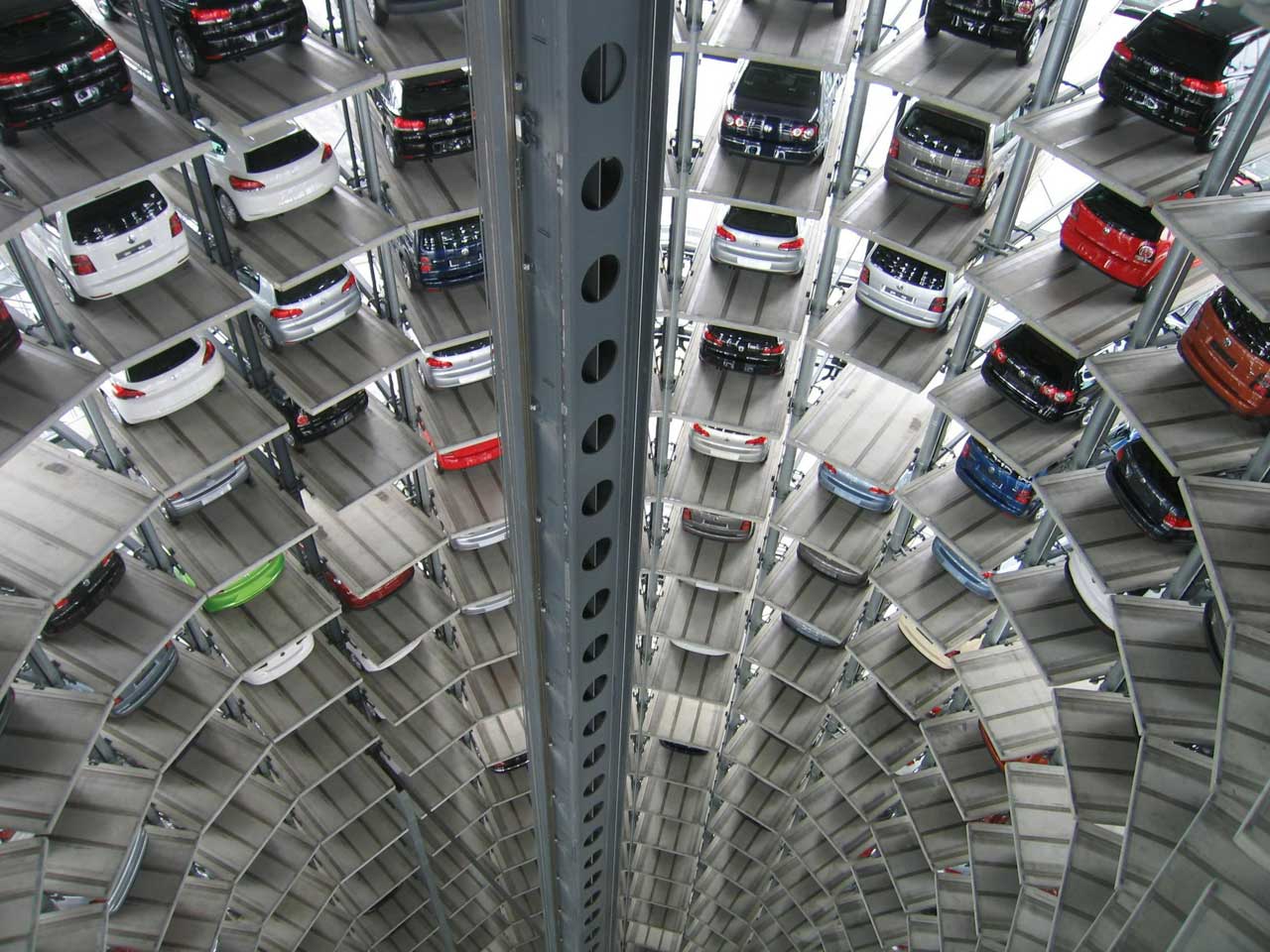
Multi storeys parking bays. Pexels Image.
This article presents the statistics of Ford Motor Company’s distributors and dealers (collectively, “dealerships”). These statistics include the numbers of Ford’s dealerships worldwide, number of dealerships by brand, and dealership growth rates.
Ford Motor has stated that most of its vehicles, parts, and accessories are sold through distributors and dealers, the substantial majority of which are independently owned.
Let’s look at the numbers.
For other statistics of Ford Motor, you may find more information on this page: Ford Motor key stats.
Please use the table of contents to navigate this page.
Table Of Contents
Definitions And Overview
O2. Why are Ford Motor’s dealerships on the decline?
Insight & Summary of Observed Trends
Z1. Insight & Summary of Ford Motor’s Dealerships Breakdown By Brand
Results By Brand
A1. Dealerships Numbers: Ford Brand, Lincoln Brand, and Ford-Lincoln Brand
Mix By Brand
A2. Dealerships Mix: Ford Brand, Lincoln Brand, and Ford-Lincoln Brand
Growth By Brand
A3. Dealerships Growth: Ford Brand, Lincoln Brand, and Ford-Lincoln Brand
Reference, Credits, and Disclosure
S1. References and Credits
S2. Disclosure
Definitions
To help readers understand the content better, the following terms and glossaries have been provided.
Ford Brand Dealerships: Ford brand dealerships are retail outlets authorized by the Ford Motor Company to sell and service Ford vehicles.
They offer a wide range of new and pre-owned Ford cars, trucks, SUVs, and parts and maintenance services. These dealerships are staffed with sales professionals and trained technicians who specialize in Ford vehicles, ensuring that customers receive knowledgeable assistance in purchasing and maintaining their vehicles.
Additionally, Ford dealerships often provide financing options and special offers to facilitate the buying process for their customers.
Ford-Lincoln Brand Dealerships: Ford-Lincoln brand dealerships are automotive retail businesses officially authorized to sell and service vehicles manufactured by the Ford Motor Company, including its Ford and luxury Lincoln brand vehicles.
These dealerships offer a wide range of new and pre-owned cars, trucks, and SUVs from the Ford and Lincoln line-ups. In addition to vehicle sales, Ford-Lincoln dealerships provide comprehensive after-sales services such as maintenance, repairs, parts replacement, and warranty services, ensuring that customers receive support throughout their vehicle ownership.
These dealerships are part of Ford’s efforts to cater to a broad spectrum of customers, from those looking for practical and reliable vehicles to those seeking luxury and premium driving experiences.
Lincoln Brand Dealerships: Lincoln Brand dealerships are retail outlets specializing in the sale of Lincoln vehicles, a luxury vehicle brand of the American automaker Ford Motor Company.
These dealerships offer a range of new and pre-owned Lincoln models, including sedans, SUVs, and crossovers. In addition to vehicle sales, Lincoln Brand dealerships provide comprehensive after-sales services such as maintenance, repairs, parts replacement, and warranty services.
They are known for offering a premium buying and service experience, aligning with the luxury status of the Lincoln brand. Customers can expect personalized attention, upscale amenities, and a focus on customer satisfaction at these dealerships.
Why are Ford Motor’s dealerships on the decline?
Ford is actively restructuring its dealership network, and several factors are driving this shift:
-
Transition to Direct Sales: Ford is moving towards a direct-to-consumer model, particularly for electric vehicles (EVs). This approach reduces reliance on traditional dealerships and streamlines inventory management.
-
Profitability Optimization: The company aims to make dealerships more profitable by consolidating locations and increasing sales volume per dealer. This strategy allows Ford to focus on fewer, larger dealerships with expanded market areas.
-
Market Adaptation: Ford has been adjusting its network in response to changing consumer preferences, including online sales and build-to-order systems. This aligns with broader industry trends favoring digital integration and flexible purchasing options.
-
Network Reduction Plan: Since 2020, Ford has been systematically reducing its dealership count, targeting nearly a 50% reduction by 2025. Recent terminations of over 50 dealerships indicate that Ford is meeting its restructuring goals.
This shift reflects Ford’s broader strategy to modernize its sales operations while adapting to the evolving automotive landscape.
Insight & Summary of Ford Motor’s Dealerships Breakdown By Brand
The following analysis consolidates the trends observed across Ford Motor’s dealerships breakdown by brand for the 2013–2025 period.
-
Ford Motor’s total dealership count has declined from 11,772 in 2013 to 8,226 in 2025 — a 30.2% reduction over twelve years that reflects a deliberate and sustained network rationalization strategy rather than market-driven attrition. The contraction has been nearly uninterrupted, with only 2014 and 2018 recording modest positive growth, and the pace has accelerated in the latter years — with declines of 5.5%, and 8.7% in 2024 and 2025 respectively representing the most aggressive dealership reductions in the period.
-
The 2025 reduction of 8.7% — removing approximately 780 net dealerships in a single year — is the largest absolute contraction in the dataset and signals that Ford is entering a more deliberate phase of network consolidation, likely driven by the requirements of EV distribution, the push toward fewer but higher-volume dealerships, and ongoing cost optimization across the retail network.
-
The Ford brand has been the overwhelmingly dominant component throughout the period, consistently representing approximately 89–91% of total dealerships across all years. Ford brand locations declined from 10,707 in 2013 to 7,479 in 2025 — a 30.1% reduction that broadly mirrors the total network contraction, confirming that the Ford brand bears the majority of the absolute reduction in dealership count.
-
Despite the significant volume decline, the Ford brand’s share of total dealerships has remained essentially stable — ranging narrowly between 89.4% and 91.3% — indicating that the rationalization has been applied proportionally rather than disproportionately affecting any single brand. The 2025 Ford brand reduction of 8.9% — the steepest in the dataset — mirrors the overall network trend and likely reflects Ford’s accelerating effort to transition its retail footprint toward a model that better supports the differentiated selling and service requirements of its electric vehicle lineup.
-
The Ford-Lincoln combined dealership category — representing locations that sell both Ford and Lincoln vehicles under one roof — has experienced the most dramatic proportional decline of any segment in the dataset, falling from 880 locations in 2013 to just 408 in 2025, a 53.6% reduction. Its share of total dealerships compressed from 7.5% to 5.0% over the period, with the most severe single-year declines occurring in 2023 at -17.1% and 2024 at -10.3%.
-
This accelerating contraction reflects Ford’s strategic decision to reposition Lincoln as a more distinct and premium brand with dedicated standalone facilities rather than co-located showrooms that can dilute the luxury experience. The elimination of combined Ford-Lincoln points is directionally consistent with Lincoln’s broader brand elevation strategy, even as it reduces the absolute number of locations where both brands are simultaneously represented.
-
The standalone Lincoln brand dealership count has exhibited the most volatile trajectory of the three categories — growing from 185 locations in 2013 to a peak of 408 in 2022 before declining to 339 by 2025. The extraordinary 108.1% surge in Lincoln locations in 2015 — from 173 to 360 — likely reflects a reclassification or expansion of standalone Lincoln designation as Ford began separating the two brands’ retail identities. Since the 2022 peak, Lincoln standalone locations have declined 16.9% over three years, suggesting that the brand’s dedicated retail expansion has not been sustained at the pace initially envisioned.
-
Lincoln’s share of total dealerships has nevertheless grown from 1.6% in 2013 to 4.1% in 2025 — a modest but meaningful increase that reflects the gradual transition away from co-located Ford-Lincoln points toward dedicated Lincoln showrooms, even as the absolute count has declined from peak. The overall dealership trajectory for Ford Motor reflects a business in active network transformation — reducing total distribution points while simultaneously reshaping the quality, format, and brand identity of its remaining retail infrastructure in preparation for the demands of an increasingly electrified product portfolio.
The table below combines Ford’s dealerships metrics into a single view for the latest 3 periods.
Ford Motor Dealerships Consolidated Averages (FY2023–2025)
| Metric | Average (2023-2025) |
|---|---|
| Dealerships Numbers | |
| Ford Brand Dealerships | 8,110 |
| Lincoln Brand Dealerships | 356 |
| Ford-Lincoln Brand Dealerships | 454 |
| Total Dealerships | 8,920 |
| Dealerships Mix (%) | |
| Ford Brand Dealerships | 90.9% |
| Lincoln Brand Dealerships | 4.0% |
| Ford-Lincoln Brand Dealerships | 5.1% |
| Dealerships Growth (%) | |
| Ford Brand Dealerships | -4.4% |
| Lincoln Brand Dealerships | -5.9% |
| Ford-Lincoln Brand Dealerships | -12.3% |
| Total Dealerships Growth | -5.0% |
Ford’s Dealerships Numbers: Ford Brand, Lincoln Brand, Ford-Lincoln Brand, Total
View data as table
Ford Dealerships by Brand — All Metrics by Fiscal Year
| Fiscal Year | Ford Brand | Lincoln Brand | Ford-Lincoln Brand | Total |
|---|---|---|---|---|
| 2013 | 10,707 | 185 | 880 | 11,772 |
| 2014 | 10,938 | 173 | 869 | 11,980 |
| 2015 | 10,727 | 360 | 884 | 11,971 |
| 2016 | 10,608 | 214 | 915 | 11,737 |
| 2017 | 10,345 | 263 | 820 | 11,428 |
| 2018 | 10,466 | 210 | 858 | 11,534 |
| 2019 | 9,883 | 279 | 759 | 10,921 |
| 2020 | 9,618 | 392 | 707 | 10,717 |
| 2021 | 8,900 | 401 | 654 | 9,955 |
| 2022 | 8,596 | 408 | 607 | 9,611 |
| 2023 | 8,639 | 385 | 503 | 9,527 |
| 2024 | 8,212 | 343 | 451 | 9,006 |
| 2025 | 7,479 | 339 | 408 | 8,226 |
The definitions of Ford brand and Lincoln brand dealerships are available here: Ford brand dealerships, Ford-Lincoln brand dealerships, and Lincoln brand dealerships.
Of the total dealerships globally, the majority of them are Ford brand dealerships, as shown in the chart above. Ford-Lincoln brand and Lincoln brand dealerships make up only a small portion of Ford Motor’s global dealerships.
Average Dealerships Numbers (FY2023–2025)
| Metric | Average (2023-2025) |
|---|---|
| Ford Brand Dealerships | 8,110 |
| Lincoln Brand Dealerships | 356 |
| Ford-Lincoln Brand Dealerships | 454 |
| Total Dealerships | 8,920 |
Ford’s Dealerships Mix: Ford Brand, Lincoln Brand, Ford-Lincoln Brand, Total
View data as table
Ford Dealerships Mix by Brand — All Metrics by Fiscal Year
| Fiscal Year | Ford Brand | Lincoln Brand | Ford-Lincoln Brand |
|---|---|---|---|
| 2013 | 91.0% | 1.6% | 7.5% |
| 2014 | 91.3% | 1.4% | 7.3% |
| 2015 | 89.6% | 3.0% | 7.4% |
| 2016 | 90.4% | 1.8% | 7.8% |
| 2017 | 90.5% | 2.3% | 7.2% |
| 2018 | 90.7% | 1.8% | 7.4% |
| 2019 | 90.5% | 2.6% | 6.9% |
| 2020 | 89.7% | 3.7% | 6.6% |
| 2021 | 89.4% | 4.0% | 6.6% |
| 2022 | 89.4% | 4.2% | 6.3% |
| 2023 | 90.7% | 4.0% | 5.3% |
| 2024 | 91.2% | 3.8% | 5.0% |
| 2025 | 90.9% | 4.1% | 5.0% |
The definitions of Ford brand and Lincoln brand dealerships are available here: Ford brand dealerships, Ford-Lincoln brand dealerships, and Lincoln brand dealerships.
Average Dealerships Mix (%) (FY2023–2025)
| Metric | Average (2023-2025) |
|---|---|
| Ford Brand Dealerships | 90.9% |
| Lincoln Brand Dealerships | 4.0% |
| Ford-Lincoln Brand Dealerships | 5.1% |
Ford’s Dealerships Growth: Ford Brand, Lincoln Brand, Ford-Lincoln Brand, Total
View data as table
Ford Dealerships Growth by Brand — All Metrics by Fiscal Year
| Fiscal Year | Ford Brand | Lincoln Brand | Ford-Lincoln Brand | Total |
|---|---|---|---|---|
| 2014 | 2.2% | -6.5% | -1.3% | 1.8% |
| 2015 | -1.9% | 108.1% | 1.7% | -0.1% |
| 2016 | -1.1% | -40.6% | 3.5% | -2.0% |
| 2017 | -2.5% | 22.9% | -10.4% | -2.6% |
| 2018 | 1.2% | -20.2% | 4.6% | 0.9% |
| 2019 | -5.6% | 32.9% | -11.5% | -5.3% |
| 2020 | -2.7% | 40.5% | -6.9% | -1.9% |
| 2021 | -7.5% | 2.3% | -7.5% | -7.1% |
| 2022 | -3.4% | 1.7% | -7.2% | -3.5% |
| 2023 | 0.5% | -5.6% | -17.1% | -0.9% |
| 2024 | -4.9% | -10.9% | -10.3% | -5.5% |
| 2025 | -8.9% | -1.2% | -9.5% | -8.7% |
The definitions of Ford brand and Lincoln brand dealerships are available here: Ford brand dealerships, Ford-Lincoln brand dealerships, and Lincoln brand dealerships.
Average Dealerships Growth (%) (FY2023–2025)
| Metric | Average (2023-2025) |
|---|---|
| Ford Brand Dealerships | -4.4% |
| Lincoln Brand Dealerships | -5.9% |
| Ford-Lincoln Brand Dealerships | -12.3% |
| Total Dealerships | -5.0% |
References and Credits
1. All financial figures presented were obtained and referenced from Ford’s quarterly and annual reports published on the company’s investor relations page: Ford shareholders page.
2. Pexels Images.
Back To Table Of Contents
Disclosure
We may use artificial intelligence (AI) tools to assist us in writing some of the text in this article. However, the data is directly obtained from original sources (usually the quarterly and annual reports) and meticulously cross-checked by our editors multiple times to ensure its accuracy and reliability.
If you find the information in this article helpful, please consider sharing it on social media. Additionally, providing a link back to this article from any website can help us create more content like this in the future.
Thank you for your support and engagement! Your involvement helps us continue to provide high-quality, reliable content.