
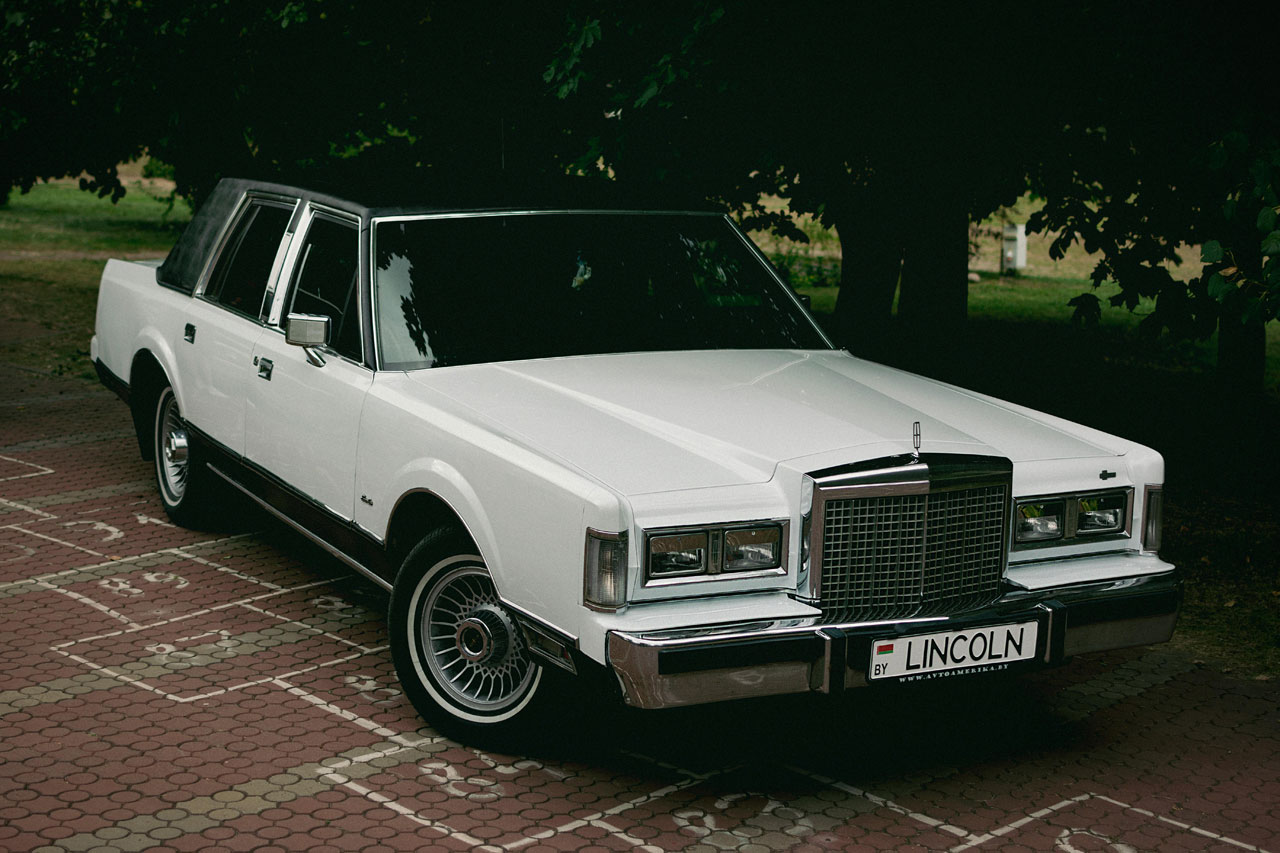
Lincoln car. Pexels Image.
This page covers the Lincoln brand vehicle sales of Ford Motor Company, categorized by vehicle type, such as SUVs and sedans.
Keep in mind that the sales results presented represent the retail volumes, which may differ significantly from the wholesale volumes.
For the definition of how Ford calculates its retail volumes, please refer to this section: ford retail volumes.
Let’s check out the numbers~!
For other key statistics of Ford Motor, you may find more resources on this page: Ford key stats.
Please use the table of contents to navigate this page.
Table Of Contents
Definitions And Overview
Insight & Summary of Observed Trends
Z1. Insight & Summary of the Sales of Ford Motor’s Lincoln Vehicles in the U.S.
Lincoln Vehicle Sales Statistics
Sales Numbers
A1. Lincoln SUV, Sedan, and Total Vehicle Sales
Sales Mix
A2. Lincoln SUV, Sedan, and Total Vehicle Sales
Sales Growth
A3. Lincoln SUV, Sedan, and Total Vehicle Sales
Reference, Credits, and Disclosure
S1. References and Credits
S2. Disclosure
Definitions
To help readers understand the content better, the following terms and glossaries have been provided.
Vehicle Retail Sales: Vehicle retail sales refer to the number of vehicles sold directly to consumers through retail channels, such as dealerships.
Ford Motor defines its retail vehicle sales as sales primarily by dealers, sales to the government, and leases to Ford management, and is based, in part, on estimated vehicle registrations; includes medium and heavy trucks.
This metric typically includes sales of new and used cars, trucks, and other types of vehicles. Vehicle retail sales provide insight into consumer demand and purchasing behavior in the automotive market.
Understanding vehicle retail sales is crucial for manufacturers, dealerships, and market analysts to assess the health and trends of the automotive market.
Lincoln Vehicle Lineup: Ford Motor’s Lincoln brand is renowned for producing luxury vehicles that combine advanced technology, refined craftsmanship, and elegant design.
Lincoln’s vehicle lineup includes a range of SUVs and sedans that cater to customers seeking comfort, performance, and sophistication.
SUVs
- Lincoln Navigator: A full-size luxury SUV offering spacious interiors, powerful performance, and advanced features. The Navigator is known for its bold design and exceptional comfort.
- Lincoln Aviator: A mid-size luxury SUV that provides a blend of performance and luxury. The Aviator offers advanced technology, a refined interior, and a smooth driving experience.
- Lincoln Nautilus: A mid-size luxury crossover SUV featuring a stylish design, advanced safety features, and a comfortable cabin. The Nautilus is designed for those who appreciate modern luxury.
- Lincoln Corsair: A compact luxury SUV that delivers agility, comfort, and advanced technology. The Corsair is ideal for urban driving and offers a premium experience in a smaller package.
Sedans
- Lincoln Continental: A full-size luxury sedan known for its elegant design, spacious interior, and advanced technology. The Continental offers a smooth and quiet ride, making it a popular choice among luxury sedan enthusiasts.
- Lincoln MKZ: A mid-size luxury sedan that combines performance, style, and innovation. The MKZ features a sleek design, advanced safety features, and a comfortable interior.
Lincoln vehicles are characterized by their attention to detail, high-quality materials, and a commitment to delivering a luxurious driving experience. The brand’s focus on innovation and customer satisfaction has established Lincoln as a prominent name in the luxury automotive market.
FAQs
To help readers understand the content better, the following FAQs have been provided.
What is driving the sales decline of Ford Motor’s Lincoln vehicles in the U.S.?
Several factors are contributing to the decline in sales of Ford Motor’s Lincoln vehicles in the U.S.:
- Dealer Network Reduction: Lincoln has been actively reducing its dealer network to streamline operations and match supply with demand. In 2023, the number of Lincoln dealers in the U.S. dropped to just over 500, down from 637 in 2022 and 685 in 2021. This reduction in the number of dealerships has likely impacted the brand’s sales volume.
- Market Competition: The luxury vehicle market is highly competitive, with numerous established brands vying for market share. Lincoln faces stiff competition from other luxury automakers, which may be affecting its sales performance.
- Economic Factors: Economic conditions, such as inflation and rising interest rates, can influence consumer spending on luxury vehicles. Potential buyers may be more cautious about making high-value purchases during uncertain economic times.
- Product Lineup and Innovation: While Lincoln has introduced new models and updated existing ones, the brand may need to further innovate and expand its product lineup to attract more customers. The success of competitors’ new models and technological advancements can also impact Lincoln’s sales.
- Brand Perception: Consumer perception of the Lincoln brand plays a crucial role in its sales performance. Efforts to rebrand and reposition Lincoln as a modern luxury brand are ongoing, but changing brand perception takes time and consistent marketing efforts.
- Supply Chain Disruptions: Like many automakers, Lincoln has faced supply chain disruptions, including shortages of critical components such as semiconductors. These disruptions can lead to production delays and limited vehicle availability, affecting sales.
- Impact of Strikes: Labor strikes, such as the United Auto Workers (UAW) strike, have affected production at key plants, including those producing Lincoln vehicles. These strikes have led to inventory depletion and reduced sales.
Overall, a combination of these factors has contributed to the decline in sales of Lincoln vehicles in the U.S. Ford Motor Company is likely addressing these challenges through strategic initiatives, including dealer network optimization, product innovation, and marketing efforts to enhance brand perception and drive sales growth.
Insight & Summary of the Sales of Ford Motor’s Lincoln Vehicles in the U.S.
The following analysis consolidates the trends observed across Ford Motor’s Lincoln brand vehicle sales by type in the U.S. for the 2016–2025 period.
-
Lincoln has completed a full transformation from a mixed SUV-and-sedan portfolio to an exclusively SUV brand — a structural repositioning that took approximately six years to execute. In 2016, sedans represented 36.5% of Lincoln’s 111,724 total U.S. sales. By 2021, sedan share had collapsed to 3.6% (3,141 units) following the phase-out of the MKZ and Continental, and by 2022 the sedan category recorded zero sales. The brand has operated as a pure SUV portfolio since 2022. This transformation mirrors a broader industry and luxury segment trend — premium sedans have lost sustained demand to crossovers and SUVs — but Lincoln’s execution was more decisive than most legacy luxury brands. Audi, BMW, and Mercedes-Benz have maintained sedan lineups despite similar pressures; Lincoln made the clean break.
-
SUV volumes have been the defining metric, and the 2024–2025 recovery is the most important recent datapoint. Lincoln SUV sales declined steadily from a peak of 87,893 units in 2019 to a trough of 81,818 in 2023 — a 6.9% contraction driven by the overall Ford U.S. volume weakness and model cycle timing. The 2024 rebound to 104,823 units (+28.1%) and 2025 continuation at 106,868 units (+2.0%) represent the strongest two-year SUV performance in the dataset, driven by the refreshed Nautilus, the redesigned Navigator, and the new Lincoln Star concept momentum. The 3-year average of 97,836 SUV units is the relevant run-rate metric and suggests Lincoln has structurally returned to the 100,000+ unit level.
-
Lincoln’s share of Ford’s total U.S. retail volume has held remarkably stable despite absolute volume volatility. Lincoln represented 4.3% of Ford’s U.S. retail volume in both 2016 and 2017, dipped to a low of 4.1% in 2018 and 2023, and has recovered to 4.8% in 2025 — with a 3-year average of 4.6%. The narrow band of 4.1–5.2% across ten years suggests Lincoln is pacing directionally with Ford’s broader U.S. retail performance rather than taking disproportionate share within the Ford family. The 5.2% reading in 2020 is a base-effect artefact — Ford’s total U.S. retail volume collapsed that year while Lincoln held more resilient.
-
Lincoln’s total U.S. sales have not recovered to their 2016 peak despite the SUV-only pivot. Total Lincoln sales peaked at 111,724 units in 2016 when the portfolio included sedans. The sedan rundown cost Lincoln approximately 30,000–40,000 annual units at the 2016 baseline, and SUV growth has not fully compensated — 106,868 SUV units in 2025 still falls short of the 111,724 combined peak. However, this comparison is somewhat misleading: the eliminated sedan volume was low-margin, declining-segment business, while the current all-SUV mix commands higher average transaction prices and better residual values. Lincoln’s profitability profile in 2024–2025 is almost certainly superior to its 2016 configuration despite lower unit counts.
-
The sedan phase-out in 2021–2022 was the single most disruptive event in the dataset. Total Lincoln sales fell from 105,410 in 2020 to 86,929 in 2021 (-17.5%) and further to 83,486 in 2022 (-4.0%) as sedan volume evaporated. The 2021 sedan decline of -82.3% (-14,639 units) is the most extreme single-year category contraction in the dataset. Lincoln managed the transition by ensuring SUV demand was intact and growing, preventing a more damaging total volume cliff. The 2022–2023 trough of approximately 82,000–84,000 units established the SUV-only floor before the 2024 recovery.
-
Structural Takeaway: Lincoln’s decade-long transformation from a balanced luxury brand to a pure premium SUV franchise is largely complete. The 2024–2025 recovery to 105,000+ units — with a 3-year average of 97,836 — confirms the SUV-only model can sustain a meaningful volume base. The critical question for Lincoln’s next phase is whether the brand can push past 110,000 annual units while sustaining the price positioning upgrades that Ford’s Lincoln team has pursued since the 2019 brand refresh. The all-electric Lincoln Star, if executed well, represents the next structural inflection point for the brand.
The table below combines all key Ford’s Lincoln brand vehicle sales metrics into a single view for the latest three fiscal years.
Ford Lincoln Brand U.S. Sales — Consolidated Averages (FY2023–2025)
| Metric | Average (FY2023–2025) |
|---|---|
| Sales Numbers (Units) | |
| Lincoln SUV | 97,836 |
| Lincoln Sedan | 0 |
| Total Lincoln Sales | 97,836 |
| Total U.S. Retail Sales (Ford) | 2,092,956 |
| Lincoln as % of Total U.S. Volume | 4.6% |
| Sales Mix (%) | |
| Lincoln SUV | 100.0% |
| Lincoln Sedan | 0.0% |
| Total Lincoln Sales | 100.0% |
| Sales Growth (%) | |
| Lincoln SUV | 9.4% |
| Lincoln Sedan * | N/A |
| Total Lincoln Sales | 9.4% |
* Lincoln Sedan was discontinued in FY2022; growth is not applicable for FY2023–2025.
Sales Numbers: Lincoln SUV, Sedan, and Total Vehicle Sales – U.S. Results Only
View data as table
Ford Lincoln U.S. Sales Overview — All Metrics by Fiscal Year
| Fiscal Year | Lincoln SUV | Lincoln Sedan | Total Lincoln Sales | Total U.S. Sales | Lincoln Sales as % of Total U.S. Volume |
|---|---|---|---|---|---|
| 2016 | 70,978 | 40,746 | 111,724 | 2,614,697 | 4.3% |
| 2017 | 71,607 | 39,552 | 111,159 | 2,586,715 | 4.3% |
| 2018 | 74,977 | 28,610 | 103,587 | 2,497,318 | 4.1% |
| 2019 | 87,893 | 24,311 | 112,204 | 2,422,698 | 4.6% |
| 2020 | 87,630 | 17,780 | 105,410 | 2,044,744 | 5.2% |
| 2021 | 83,788 | 3,141 | 86,929 | 1,905,955 | 4.6% |
| 2022 | 83,486 | 0 | 83,486 | 1,864,464 | 4.5% |
| 2023 | 81,818 | 0 | 81,818 | 1,995,912 | 4.1% |
| 2024 | 104,823 | 0 | 104,823 | 2,078,832 | 5.0% |
| 2025 | 106,868 | 0 | 106,868 | 2,204,124 | 4.8% |
You may find more information about Ford’s Lincoln brand vehicles and sales definition here: Lincoln vehicle lineup and vehicle retail sales.
Lincoln U.S. Sales Numbers (Units) — Average (FY2023–2025)
| Category | Average (FY2023–2025) |
|---|---|
| Lincoln SUV | 97,836 |
| Lincoln Sedan | 0 |
| Total Lincoln Sales | 97,836 |
| Total U.S. Retail Sales (Ford) | 2,092,956 |
| Lincoln as % of Total U.S. Volume | 4.6% |
Sales Mix: Lincoln SUV, Sedan, and Total Vehicle Sales – U.S. Results Only
View data as table
Ford Lincoln Sales Mix — All Metrics by Fiscal Year
| Fiscal Year | Lincoln SUV | Lincoln Sedan |
|---|---|---|
| 2016 | 63.5% | 36.5% |
| 2017 | 64.4% | 35.6% |
| 2018 | 72.4% | 27.6% |
| 2019 | 78.3% | 21.7% |
| 2020 | 83.1% | 16.9% |
| 2021 | 96.4% | 3.6% |
| 2022 | 100.0% | 0.0% |
| 2023 | 100.0% | 0.0% |
| 2024 | 100.0% | 0.0% |
| 2025 | 100.0% | 0.0% |
You may find more information about Ford’s Lincoln brand vehicles and sales definition here: Lincoln vehicle lineup and vehicle retail sales.
Lincoln U.S. Sales Mix (%) — Average (FY2023–2025)
| Category | Average (FY2023–2025) |
|---|---|
| Lincoln SUV | 100.0% |
| Lincoln Sedan | 0.0% |
| Total Lincoln Sales | 100.0% |
Sales Growth: Lincoln SUV, Sedan, and Total Vehicle Sales – U.S. Results Only
View data as table
Ford Lincoln Sales Growth — All Metrics by Fiscal Year
| Fiscal Year | Lincoln SUV | Lincoln Sedan | Total Lincoln Sales | Total U.S. Sales |
|---|---|---|---|---|
| 2017 | 0.9% | -2.9% | -0.5% | -1.1% |
| 2018 | 4.7% | -27.7% | -6.8% | -3.5% |
| 2019 | 17.2% | -15.0% | 8.3% | -3.0% |
| 2020 | -0.3% | -26.9% | -6.1% | -15.6% |
| 2021 | -4.4% | -82.3% | -17.5% | -6.8% |
| 2022 | -0.4% | N.A. | -4.0% | -2.2% |
| 2023 | -2.0% | N.A. | -2.0% | 7.1% |
| 2024 | 28.1% | N.A. | 28.1% | 4.2% |
| 2025 | 2.0% | N.A. | 2.0% | 6.0% |
You may find more information about Ford’s Lincoln brand vehicles and sales definition here: Lincoln vehicle lineup and vehicle retail sales.
Lincoln U.S. Sales Growth (%) — Average (FY2023–2025)
| Category | Average (FY2023–2025) |
|---|---|
| Lincoln SUV | 9.4% |
| Lincoln Sedan * | N/A |
| Total Lincoln Sales | 9.4% |
* Lincoln Sedan was discontinued in FY2022; growth is not applicable for FY2023–2025.
References and Credits
1. All vehicle sales data presented were obtained and referenced from Ford’s annual reports and U.S. monthly sales report published on the company’s investor relation page: Ford’s Financial Reports.
2. Pexels Images.
Back To Table Of Contents
Disclosure
We may use artificial intelligence (AI) tools to assist us in writing some of the text in this article. However, the data is directly obtained from original sources (usually the quarterly and annual reports) and meticulously cross-checked by our editors multiple times to ensure its accuracy and reliability.
If you find the information in this article helpful, please consider sharing it on social media. Additionally, providing a link back to this article from any website can help us create more content like this in the future.
Thank you for your support and engagement! Your involvement helps us continue to provide high-quality, reliable content.