
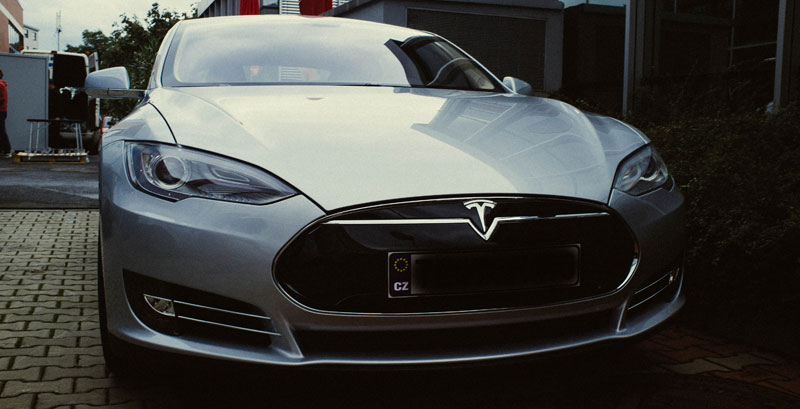
A Tesla Model S. Image source: Flickr Image.
This article presents the sales of Tesla’s regulatory credits, consisting of revenue figures, regulatory credits to revenue, regulatory credits per vehicle, regulatory credits growth rates, and profitability with and without regulatory credits.
Let’s get started!
For other key statistics of Tesla, you may find more resources on this page: Tesla key stats.
Please use the table of contents to navigate this page.
Table Of Contents
Definitions And Overview
Insight & Summary of Observed Trends
Z1. Insight & Summary of Tesla’s Sales of Regulatory Credits
Regulatory Credits Revenue
A1. Numbers, Per Car Economics, and Growth
Ratio to Revenue
A2. Regulatory Credits to Total and Automotive Revenue
Margin Impact
A3. Automotive Gross Profit Margin w/ & w/o Regulatory Credits
Reference, Credits, and Disclosure
S1. References and Credits
S2. Disclosure
Definitions
To help readers understand the content better, the following terms and glossaries have been provided.
What Are Regulatory Credits?: Regulatory credits are credits or points provided by state and federal governments as incentives for contributing to zero pollution in the environment. Essentially, these credits reward companies for producing vehicles that meet or exceed emission standards.
In states like California and several others in the US, auto manufacturers, including Tesla, Ford, General Motors, and others, are mandated by law to meet specific minimum emission standards for all the vehicles they produce and sell. Failure to meet these standards can result in hefty fines or even the risk of having their licenses revoked by the state government.
The regulations allow automakers, like Tesla, to retain any surplus credits if they earn more than the required minimum. These surplus credits can then be sold to other manufacturers who need them to comply with the laws. This trading of credits provides a financial incentive for companies that produce cleaner vehicles and helps those struggling to meet emission standards to avoid penalties.
Regulatory Credits Revenue Per Vehicle: Tesla’s regulatory credits revenue per vehicle is calculated by dividing the total revenue Tesla earns from selling regulatory credits in a given period by the total number of vehicles it delivers in the same period.
Regulatory credits are earned by Tesla for producing zero-emission vehicles and can be sold to other manufacturers that need them to comply with environmental regulations. This revenue is an additional income stream for Tesla, separate from the income generated by selling its electric vehicles (EVs).
The specific amount per vehicle can vary each quarter depending on the total amount of regulatory credits sold and the number of vehicles delivered.
Insight & Summary of Tesla’s Sales of Regulatory Credits
The following analysis consolidates the trends observed across Tesla’s regulatory credits revenue for the 2015–2025 period.
-
Regulatory credits are a meaningful but structurally volatile revenue line. Credits grew from $169M in 2015 to a peak of $2.76B in 2024, before retreating to $1.99B in 2025. The 3-year average of $2.18B represents a non-trivial revenue contribution, but the year-to-year swings are extreme — +166% in 2020, -27.9% in 2025 — driven almost entirely by external factors: the pace at which legacy automakers need credits to comply with emissions regulations, and the regulatory frameworks in the U.S. and Europe governing credit supply and pricing. Tesla has no direct control over either variable, which makes this revenue stream fundamentally unpredictable. The 54.4% surge in 2024 followed by a -27.9% contraction in 2025 is a clear illustration of this volatility.
-
As a share of revenue, credits are modest but material to profitability. At a 3-year average of 2.2% of total revenue and 2.5% of automotive revenue, credits appear small. However, their profitability impact is disproportionate: regulatory credit revenue flows directly to gross profit at near-100% margin, while automotive manufacturing carries real costs. In 2025, the $1.99B in credits effectively added approximately 2.4 percentage points to automotive gross margin (16.2% reported vs. 13.8% excluding credits). In the peak year of 2020, the $1.58B in credits added approximately 5.4 percentage points (22.4% reported vs. 17.0% ex-credits). This means that in certain periods, regulatory credits have been the difference between Tesla’s reported automotive margins appearing competitive vs. structurally challenged.
-
Revenue per car has declined significantly as Tesla’s delivery volume has scaled. Credits per car peaked at $3,979 in 2016 (when volumes were small and credits were relatively large) and have compressed to $1,218 in 2025 as vehicle deliveries scaled to 1.6M units. The 3-year average of $1,251 per car is less than one-third of the 2016 peak. This declining per-unit credit yield reflects two dynamics: Tesla’s credit supply has not grown proportionally with its vehicle base, and the absolute dollar amount of credits, while large, has grown far more slowly than deliveries. On a per-unit basis, credits are increasingly irrelevant to the economics of each individual vehicle sold.
-
The gross margin impact reveals Tesla’s underlying margin vulnerability. The most strategically important insight in the dataset is the persistent and widening gap between reported and ex-credits automotive gross margin. In the peak years of 2021–2022, that gap was 2.9–2.3 percentage points — meaningful but not alarming, given that underlying margins were 24.0–24.2%. In 2023–2025, with underlying margins compressed to 13.8–16.2%, the 2–3 percentage point credit contribution becomes more significant in relative terms. The 3-year average underlying automotive gross margin of 14.6% (ex-credits) versus the reported 17.1% highlights that Tesla’s organic manufacturing economics have deteriorated materially from their peak, and that credits are providing a persistent cosmetic lift to reported profitability.
-
Structural Takeaway: Regulatory credits are best understood as a non-recurring, policy-dependent subsidy that Tesla has skillfully monetized during a period when legacy automakers were non-compliant. As those automakers accelerate EV production and reduce their credit deficits — and as policy frameworks evolve — this revenue stream faces structural decline risk. For investors modeling Tesla’s intrinsic earnings power, the ex-credits gross margin of 14.6% (3-year average) is the more conservative and arguably more accurate representation of the core automotive business’s profitability. The gap between reported and ex-credits margin deserves ongoing monitoring as a barometer of underlying business health.
The table below combines all key regulatory credits revenue metrics into a single view for the latest three fiscal years.
Tesla Regulatory Credits Revenue — Consolidated Averages (FY2023–2025)
| Metric | Average (2023–2025) |
|---|---|
| Revenue Numbers | |
| Regulatory Credit Revenue (US$ Millions) | 2,182 |
| Regulatory Credits Revenue Per Car (US$) | 1,251 |
| Regulatory Credit Revenue Growth (%) | 9.1% |
| Revenue Ratios | |
| Regulatory Credit to Total Revenue (%) | 2.2% |
| Regulatory Credit to Automotive Revenue (%) | 2.5% |
| Gross Profit & Margin | |
| Automotive Gross Profit (US$ Millions) | 14,874 |
| Automotive Gross Profit Excl. Regulatory Credits (US$ Millions) | 12,692 |
| Automotive Gross Margin (%) | 17.1% |
| Automotive Gross Margin Excl. Regulatory Credits (%) | 14.6% |
Regulatory Credits Revenue – Numbers, Per Car Economics, and Growth
View data as table
Tesla Regulatory Credits Revenue Overview — All Metrics by Fiscal Year
| Fiscal Year | Regulatory Credit Revenue | Regulatory Credits Revenue Per Car | Regulatory Credit Revenue Growth |
|---|---|---|---|
| 2015 | $169M | $3,340 | -21.8% |
| 2016 | $302M | $3,979 | 78.7% |
| 2017 | $360M | $3,494 | 19.2% |
| 2018 | $419M | $1,707 | 16.4% |
| 2019 | $594M | $1,616 | 41.8% |
| 2020 | $1,580M | $3,162 | 166.0% |
| 2021 | $1,465M | $1,565 | -7.3% |
| 2022 | $1,776M | $1,352 | 21.2% |
| 2023 | $1,790M | $990 | 0.8% |
| 2024 | $2,763M | $1,544 | 54.4% |
| 2025 | $1,993M | $1,218 | -27.9% |
The definitions of Tesla’s regulatory credit revenue are available here: what are regulatory credits? and regulatory credit revenue per vehicle.
Tesla Regulatory Credits — Average Revenue Numbers (FY2023–2025)
| Metric | Average (2023–2025) |
|---|---|
| Regulatory Credit Revenue (US$ Millions) | 2,182 |
| Regulatory Credits Revenue Per Car (US$) | 1,251 |
| Regulatory Credit Revenue Growth (%) | 9.1% |
Regulatory Credits to Total and Automotive Revenue
View data as table
Tesla Regulatory Credits Revenue Ratio — All Metrics by Fiscal Year
| Fiscal Year | Regulatory Credit to Total Revenue Ratio | Regulatory Credit to Automotive Revenue Ratio |
|---|---|---|
| 2015 | 4.2% | 4.2% |
| 2016 | 4.3% | 4.4% |
| 2017 | 3.1% | 3.4% |
| 2018 | 2.0% | 2.1% |
| 2019 | 2.4% | 2.6% |
| 2020 | 5.0% | 5.3% |
| 2021 | 2.7% | 2.9% |
| 2022 | 2.2% | 2.3% |
| 2023 | 1.8% | 2.0% |
| 2024 | 2.8% | 3.2% |
| 2025 | 2.1% | 2.4% |
Tesla Regulatory Credits — Average Revenue Ratios (%) (FY2023–2025)
| Metric | Average (2023–2025) |
|---|---|
| Regulatory Credit to Total Revenue (%) | 2.2% |
| Regulatory Credit to Automotive Revenue (%) | 2.5% |
Automotive Gross Profit Margin w/ & w/o Regulatory Credits
View data as table
Tesla Automotive Gross Profit and Margin Excluding Regulatory Credits — All Metrics by Fiscal Year
| Fiscal Year | Automotive Gross Profit | Automotive Gross Profit without Regulatory Credits Revenue | Automotive Gross Margin | Automotive Gross Margin without Regulatory Credits Revenue |
|---|---|---|---|---|
| 2015 | $921M | $752M | 22.8% | 18.7% |
| 2016 | $1,596M | $1,294M | 23.4% | 19.0% |
| 2017 | $1,981M | $1,621M | 18.6% | 15.2% |
| 2018 | $3,852M | $3,433M | 19.4% | 17.2% |
| 2019 | $3,879M | $3,285M | 16.8% | 14.3% |
| 2020 | $6,612M | $5,032M | 22.4% | 17.0% |
| 2021 | $13,735M | $12,270M | 26.9% | 24.0% |
| 2022 | $20,565M | $18,789M | 26.5% | 24.2% |
| 2023 | $16,519M | $14,729M | 18.2% | 16.2% |
| 2024 | $14,810M | $12,047M | 16.9% | 13.8% |
| 2025 | $13,292M | $11,299M | 16.2% | 13.8% |
Tesla Regulatory Credits — Average Gross Profit & Margin (FY2023–2025)
| Metric | Average (2023–2025) |
|---|---|
| Automotive Gross Profit (US$ Millions) | 14,874 |
| Automotive Gross Profit Excl. Regulatory Credits (US$ Millions) | 12,692 |
| Automotive Gross Margin (%) | 17.1% |
| Automotive Gross Margin Excl. Regulatory Credits (%) | 14.6% |
References and Credits
1. All financial figures presented were obtained and referenced from Tesla’s annual reports published on the company’s investor relations page: Tesla Update Letters and Presentations.
2. Flickr Images.
Back To Table Of Contents
Disclosure
We may utilize the assistance of artificial intelligence (AI) tools to produce some of the text in this article. However, the data is directly obtained from original sources (usually the quarterly and annual reports) and meticulously cross-checked by our editors multiple times to ensure its accuracy and reliability.
If you find the information in this article helpful, please consider sharing it on social media. Additionally, providing a link back to this article from any website can help us create more content like this in the future.
Thank you for your support and engagement! Your involvement helps us continue to provide high-quality, reliable content.
Battery Electric Vehicles are not emissions free. It would be great to see you cover the true emissions of these vehicles both in terms of manufacture and the source of the energy. The public deserves to know, since after all they are paying for it via the subsidies as well as the passed on costs of the regulatory credits.
Revenue is fine but do they EARN any profits from vehicle production solely? It seems the credits make them profitable and without them they lose money on every car.
Even with emission credit revenue included, Tesla doesn’t seem to make any meaningful profits!
EV regulatory credits are part of the business model, not just for TSLA but for other automobile manufacturers. TESLA is way ahead of the game and therefore is reaping the highest revenues from these credits. I don’t understand why people get hung up on one aspect of this company. We should be concerned with companies that are buying these credits just to meet emissions standards.
Really? Do your research what is the carbon footprint of an electric car. Those regulatory credits are quite absurd. And why the hell are they taking them from one car manufacturer and giving them to the car manufacturers instead of planting trees for example?
The Zev credit system is too complicated. The government should simply replace it with a flat tax on carbon.
Tesla doesn’t need a $1b per year government handout.
Apparently, this money does not come from the government. It comes from other automakers who has yet to comply with the emission standard. The government only acts as the moderator or the middleman.
Just exactly how do these regulatory credits work. Does TESLA sell vehicles, and/or vehicle technology to the ” Big Three”, etc..?
What happens when everybody starts making electric vehicle ? How will Tesla be profitable ?
Then Tesla will have nowhere to sell its regulatory credits!